


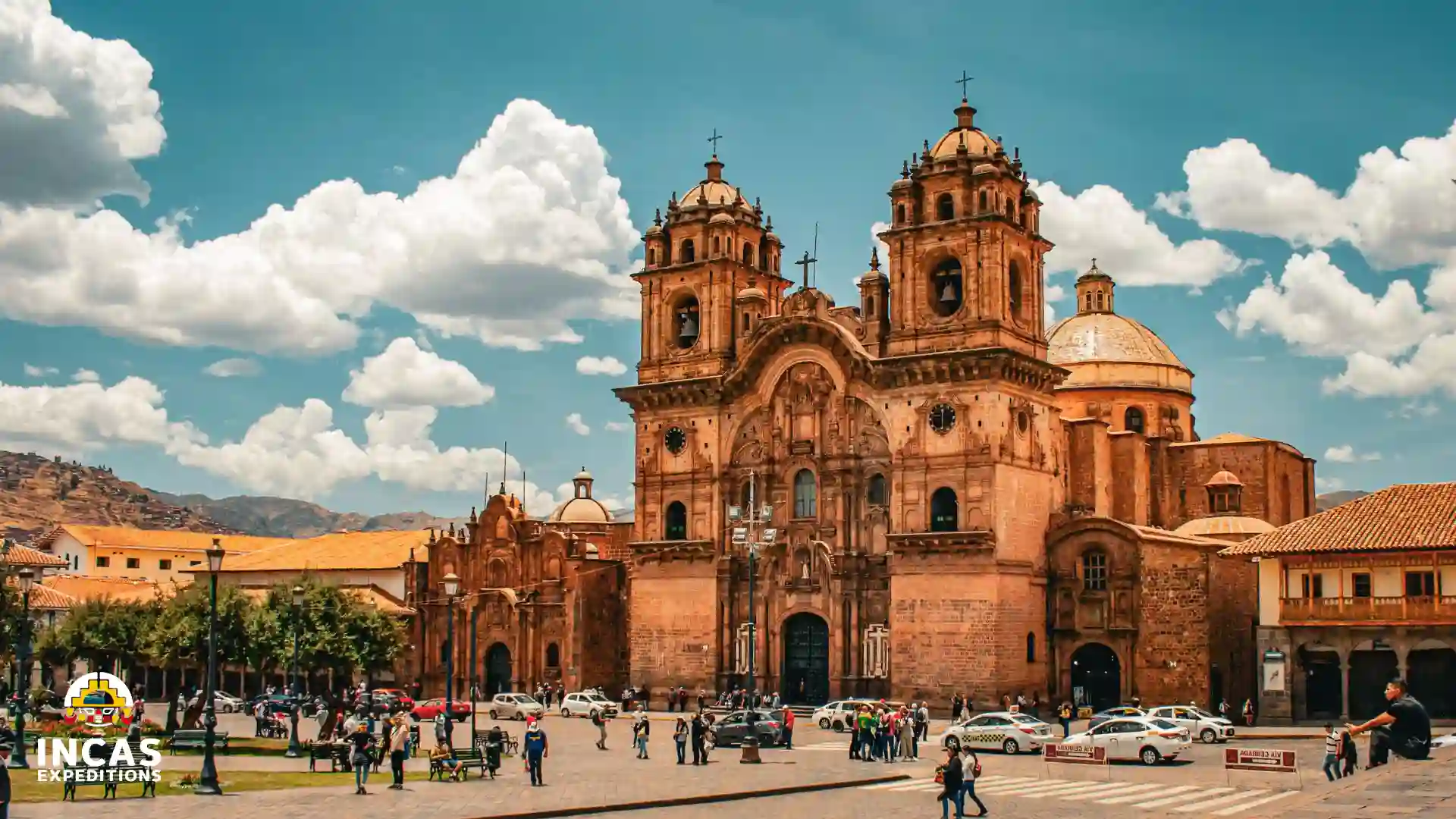
Churches in Cusco tell a story that began with the Spanish arrival in Peru, when evangelization and the eradication of idolatry led priestly orders of the time to build numerous temples atop the most important Inca sites and palaces. Many of these religious structures are considered works of art, and walking through the historic center of Cusco lets you see the monumental architecture that was created. Few know that the city’s first church was built in 1534. In this article, I want to tell you all about the cathedrals in Cusco and how you can visit them during your trip.
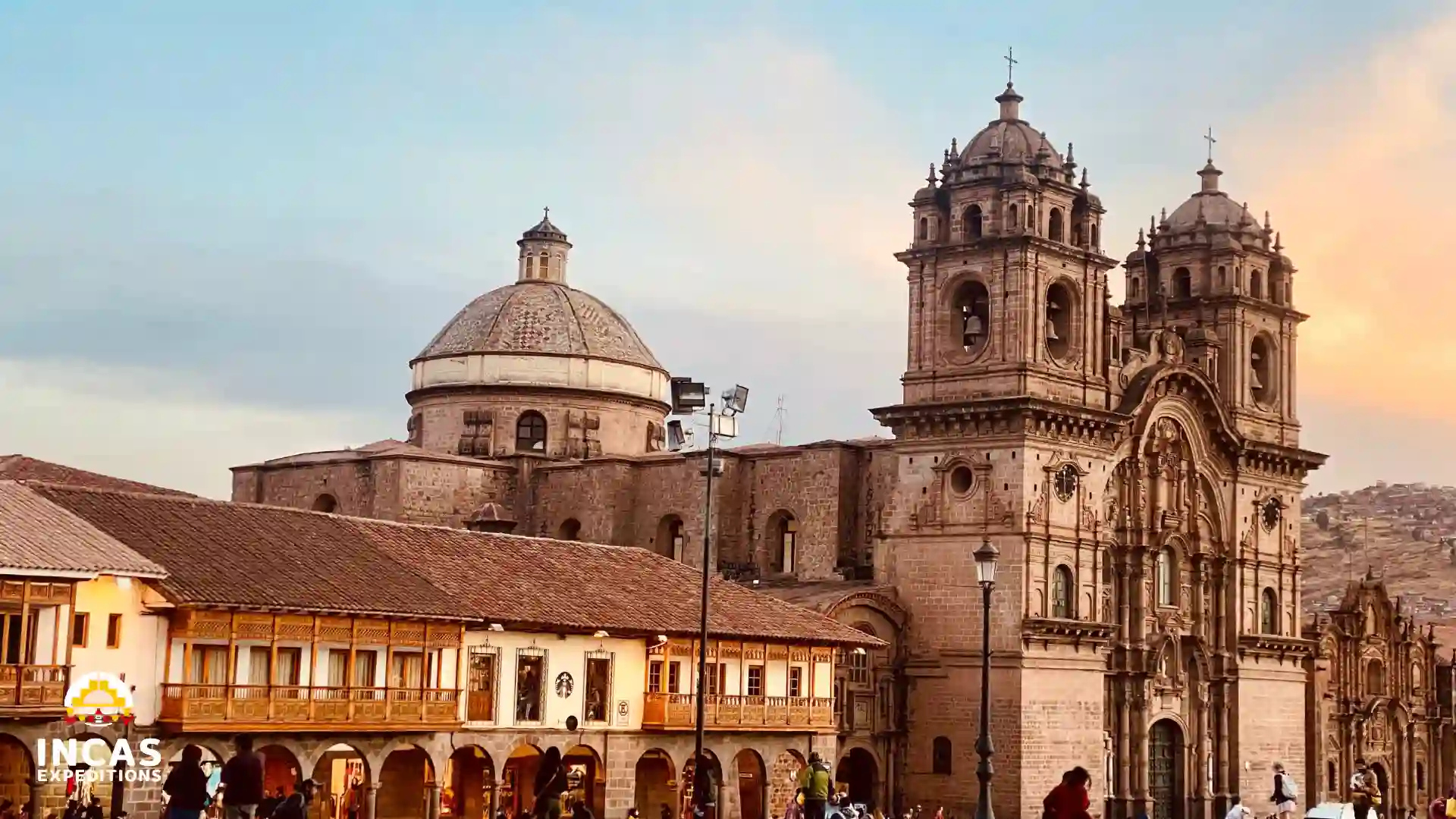
Why are Cusco’s churches so important?
The churches in Cusco are much more than religious buildings. They reveal how the city changed after the arrival of the Spanish and how European traditions gradually merged with Andean culture. Their stone walls, carved altars, religious paintings and indigenous symbols preserve different chapters of Cusco’s history.
History of the churches in Cusco
The construction of the first colonial churches began during the 16th century, shortly after the Spanish established control over the former capital of the Inca Empire. Catholic temples, convents and monasteries were built throughout the city as part of the new colonial order.
Some were constructed on or near important Inca ceremonial sites. Others reused stones and foundations from earlier structures. After the powerful earthquake of 1650 damaged many buildings, several churches were reconstructed or modified, contributing to the development of the distinctive baroque style that can still be seen around Cusco today.
Inca foundations and colonial architecture
One of the most distinctive characteristics of Cusco’s churches is their connection with the city’s Inca past. Several colonial religious buildings were established over earlier temples, palaces or ceremonial spaces, creating a visible contrast between Inca stonework and Spanish architecture.
The best-known example is the Church and Convent of Santo Domingo, which was built over Qorikancha, the most important temple dedicated to the Sun during the Inca period. Parts of the original Inca walls remain inside the complex, allowing visitors to observe the precision of Inca construction alongside colonial courtyards, arches and religious decorations.
6 Beautiful Churches in Cusco
Join us on a journey through six beautiful churches in Cusco, where colonial architecture, Andean traditions and centuries of history come together in some of the region’s most remarkable religious landmarks.
1. Cusco Cathedral
Location: Sits on the northeast side of the Plaza de Armas, on the site once occupied by the Kiswarkancha, the former palace of Inca Wiracocha.
Cusco Cathedral sits on the site once occupied by Suntur Wasi and the Kiswarkancha, the former palace of Inca Wiracocha, right on the northeast corner of the Plaza de Armas. Construction dragged on for roughly a century, and the builders used massive stone blocks hauled straight from the Sacsayhuamán fortress. The result blends Renaissance and baroque styles, which is part of why the facade looks different depending on which angle you’re standing at.
What to see inside the Cathedral complex
The Cathedral isn’t a single building, it’s actually a complex of three connected churches sharing the same plaza frontage. Inside the main nave, look for the Cusco School paintings lining the walls, including the well-known Last Supper scene where the meal on the table is roasted guinea pig instead of lamb. The carved wooden choir and the silver altarpieces are worth slowing down for, along with the revered image known as the Lord of the Earthquakes. Two smaller churches flank the main Cathedral as part of the same complex, the Church of the Triumph and the Church of the Holy Family, and both are usually included in the same visit rather than treated as separate stops.
2. Church of the Society of Jesus
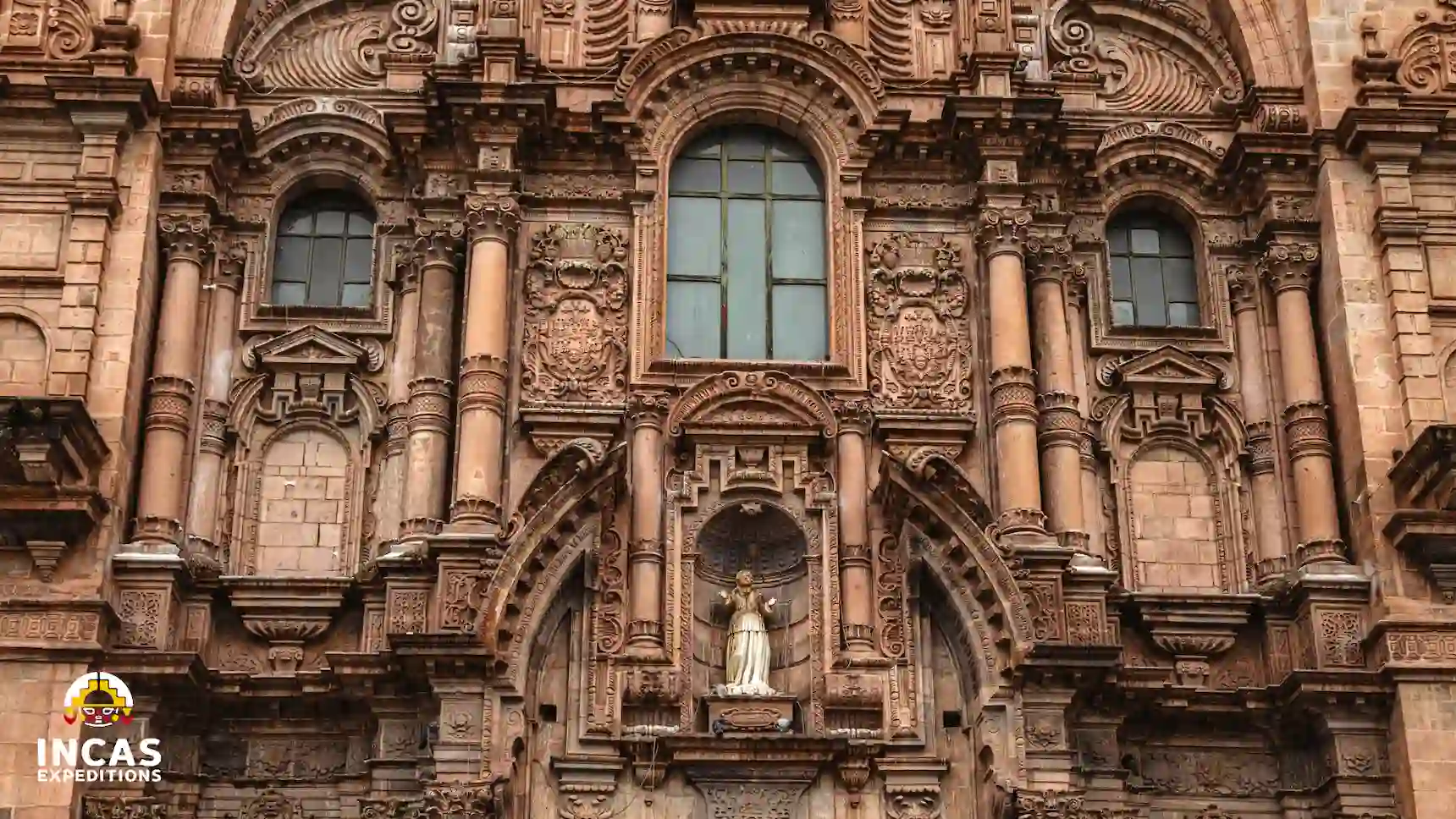
The Church of the Society of Jesus, commonly called La Compañía de Jesús, standing just off the Plaza de Armas, the Church of the Society of Jesus was built on the site of the Amarucancha, the former palace of Inca Huayna Cápac. Its facade is widely considered one of the finest examples of baroque design in the city, and many visitors find it even more detailed than the Cathedral’s own front.
The main altar, carved from cedar and covered in gold leaf, anchors a single nave lined with colonial paintings and carvings. Because it sits so close to the Cathedral, most people cover both in the same walk across the main square.
How to visit La Compañía de Jesús
The church faces the Plaza de Armas, only a few meters from Cusco Cathedral. Allow approximately 30 to 45 minutes for the interior. The Andean Baroque Route currently lists visiting hours from 9:00 a.m. to 11:20 a.m. and from 1:00 p.m. to 5:20 p.m. daily. Its published reference fee is S/12 for the individual church or S/25 for the complete four-temple route, with the route ticket valid for seven calendar days. Schedules can be interrupted by Masses or religious events.
3. San Pedro Apóstol Church in Andahuaylillas
Location: In the town of Andahuaylillas, about 40 to 45 kilometers southeast of Cusco, facing the town’s main square.
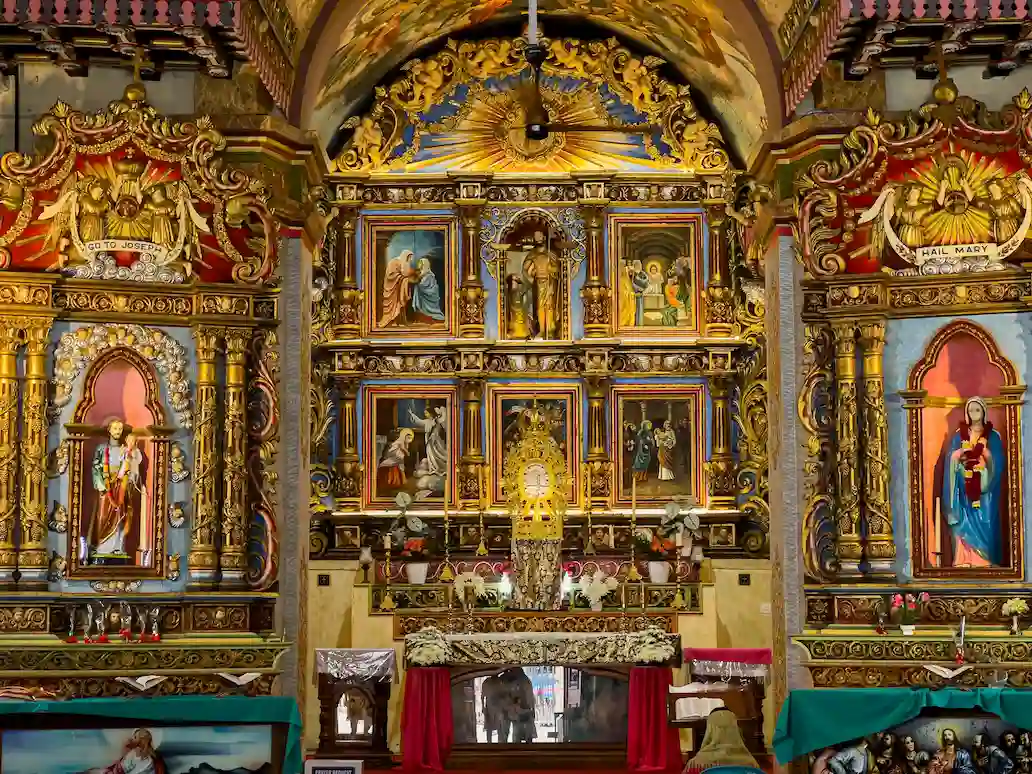
Known as the Sistine Chapel of the Americas, this church was built by Jesuit priests sometime in the late 1500s, though the exact year isn’t documented. What is confirmed is that one of the murals inside, signed by artist Luis de Riaño, carries the date 1626, which puts a firm limit on how late construction could have finished. The plain adobe exterior gives no hint of what’s waiting inside.
Murals, altarpieces and painted ceilings
Step through the doors and gold leaf covers nearly every surface, framing Cusco School paintings, a mudéjar-style ceiling, and two of the oldest pipe organs in the Americas. The baptistry carries an inscription in five languages, a reminder that this church once served as a center for translating Christian teaching into local languages. The church was briefly closed in 2024 after earthquake damage, though recent visitor reports confirm it has since reopened to the public.
Tickets and hours
Open daily, roughly 7:30am to 5pm, though hours can shift seasonally. Entry runs around S/15 ($4), with a reduced rate near S/10 ($3) for students and Peruvian, Colombian, Ecuadorian, and Bolivian nationals. Photography inside is not allowed.
4. Templo de San Juan Bautista de Huaro
Location: In the town of Huaro, a short distance past Andahuaylillas along the same southern route from Cusco.
Built between the late 1600s and early 1700s under the direction of Fray Sebastián de Menacho, this church is part of the Andean Baroque Route alongside Andahuaylillas and the Canincunca chapel. The sober stone facade contrasts sharply with what’s waiting inside.
Murals covering the walls and ceiling
The interior is almost entirely covered in mural paintings created by Cusco artist Tadeo Escalante, completed around 1802. The murals depict death, judgment, heaven, and hell, blending European baroque style with Andean symbolism, including figures like dragons and unicorns mixed in with angels and saints. The gold leaf main altarpiece features San Juan Bautista at its center, and the church also holds more than 60 sculptures and 50 paintings.
Tickets and hours
The official Andean Baroque Route lists Huaro as open daily from 8:30 a.m. to 4:30 p.m.
Access is included in the S/18 South Valley ticket covering Huaro, Andahuaylillas and Canincunca. Huaro lies approximately ten minutes by road from Andahuaylillas, making the two churches easy to visit during the same trip.
Traveler’s tip: Do not skip Huaro after visiting Andahuaylillas. The two interiors are very different: Andahuaylillas is known for its early colonial decoration, while Huaro stands out for Escalante’s dramatic vision of the afterlife.
5. Basilica and Convent of La Merced
Location: About 100 meters southwest of the Plaza de Armas, facing the Plazoleta Espinar.
La Merced was founded by Father Sebastián de Trujillo between 1535 and 1536, making it one of the earliest religious foundations in Cusco. Francisco Pizarro donated the adjoining land in 1538 for the first Mercedarian temple in the city. The 1650 earthquake destroyed much of the original structure, and the church and convent seen today were largely rebuilt between 1651 and 1670, with the bell tower added slightly later.
The cloister and religious art collection
The convent holds one of the most valuable religious artifacts in Peru, a gold monstrance decorated with 1,518 diamonds and 615 precious stones, including rubies, topaz, and emeralds. The cloisters contain paintings depicting the life of Pedro de Nolasco, founder of the Mercedarian order, and the remains of conquistadors Diego de Almagro the Elder, Diego de Almagro the Younger, and Gonzalo Pizarro rest inside the church.
6. The church in Checacupe
Location: In the town of Checacupe, approximately 100 kilometers southeast of Cusco.
The documented historic church in Checacupe is the Virgen Inmaculada de Checacupe, sometimes referred to in English as the Church of the Immaculate Conception. It should not be called San Pedro Apóstol de Checacupe.
The temple belongs to the group of historic rural churches included in Peru’s proposal for the Rural Temples of Cusco, currently on UNESCO’s Tentative List. It preserves architectural features dating from the late 16th and early 17th centuries, along with artwork added during later colonial periods.
What to see inside the Church
The interior contains mural paintings, canvases associated with the Cusco School and a richly decorated Churrigueresque altarpiece covered with gold leaf.
One of its most distinctive elements is the group of the twelve apostles represented in carved and polychrome figures. The church also preserves a choir area, religious sculptures and a historic organ.
Checacupe is not part of the official Andean Baroque Route ticket. It is better presented as an additional cultural stop for travelers continuing farther south toward Canchis, the colonial bridges of Checacupe or the route to the Q’eswachaka bridge.
Traveler’s tip: Confirm opening arrangements before traveling from Cusco. Unlike the churches managed as regular tourist attractions, rural parish churches may open mainly for Masses, local celebrations or previously coordinated visits.
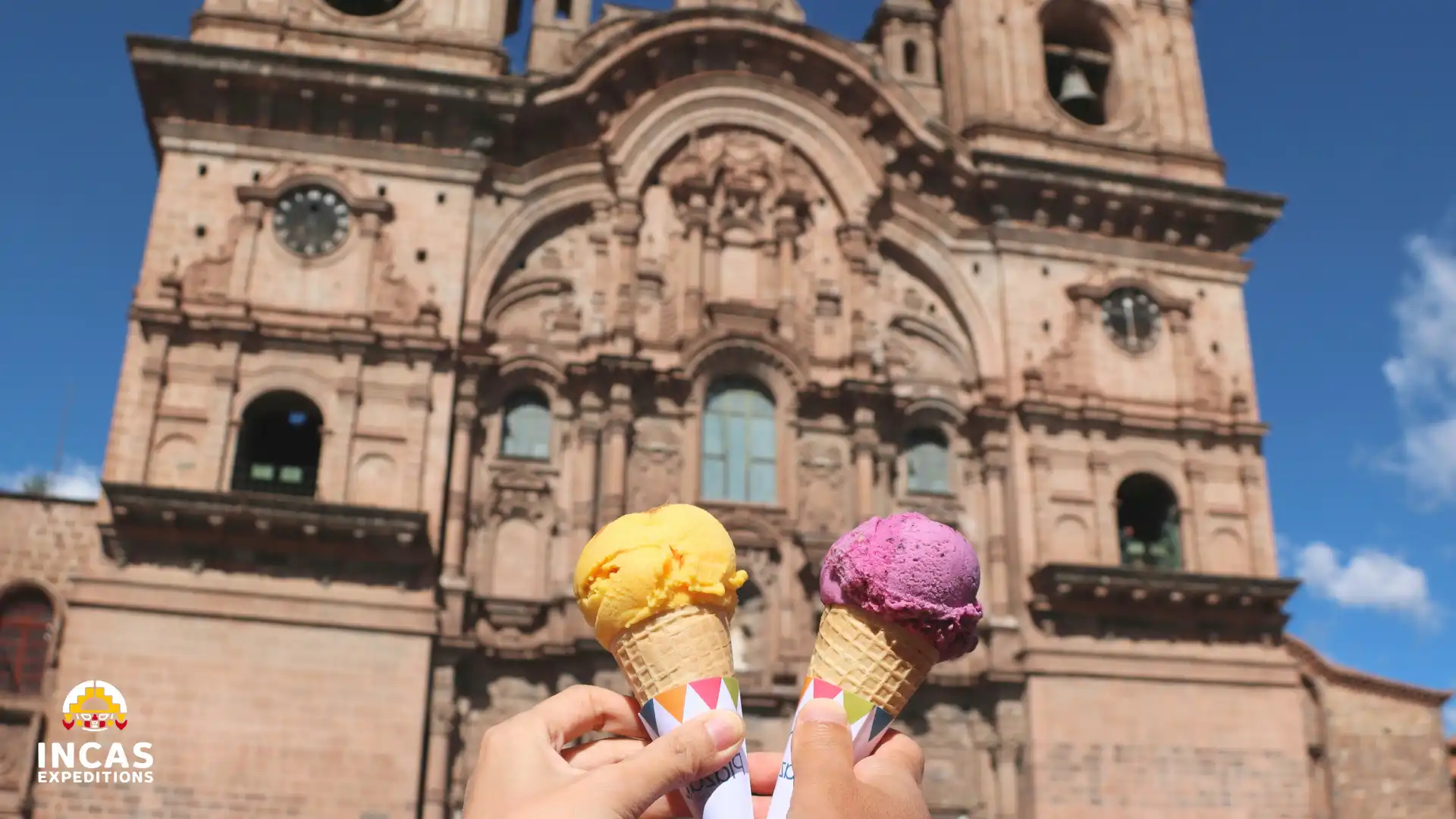
How to plan a church route from Cusco
The best way to explore the churches of Cusco depends on how much time you have and whether you want to remain in the historic center or travel into the South Valley. The churches in central Cusco can easily be reached on foot, while Andahuaylillas, Huaro and Canincunca require transportation and are better visited together.
Half-Day Route through Cusco’s Historic Center
If you only have a few hours, begin at the Plaza de Armas, where two of the city’s most important churches stand only a short distance apart.
Start with Cusco Cathedral, allowing around 45 to 60 minutes to explore its chapels, Cusco School paintings and adjoining churches. From there, cross the Plaza de Armas to visit La Compañía de Jesús, whose Baroque façade and gilded main altar offer a striking contrast to the heavier architecture of the cathedral.
Cusco Cathedral → La Compañía de Jesús → Basilica and Convent of La Merced
Allow approximately three to four hours, including walking time and short breaks. Starting in the morning is usually more comfortable, as the Plaza de Armas becomes busier later in the day.
Travelers who want a more complete route can also include Santa Catalina Monastery, Santo Domingo and Qorikancha, and the Church of San Blas. A logical order would be:
Cusco Cathedral → La Compañía de Jesús → Santa Catalina Monastery → Santo Domingo and Qorikancha → La Merced → Church of San Blas
This expanded route can take most of the day, especially if you stop to examine the paintings and altarpieces instead of moving quickly between buildings. San Blas is best left until the end because it requires an uphill walk from the historic center.
Practical tips for visiting Churches in Cusco
Cusco’s churches are historical attractions, but they’re also active religious spaces, so it helps to plan around their schedules and follow a few basic rules.
Tickets and hours: Not every church runs on the same system. Some sell individual tickets, others fall under a combined circuit, and smaller parish churches mainly open around Mass times. La Compañía de Jesús and the three South Valley churches share the Andean Baroque Route ticket, with reference hours currently listed as 9am to 11:20am and 1pm to 5:20pm for La Compañía, 7:30am to 5:30pm for Andahuaylillas, and 8:30am to 4:30pm for both Huaro and Canincunca. These can shift during festivals or restoration work, so it’s worth checking before building your day around them. Carry cash, since smaller temples don’t always take cards, and hold onto your ticket until the end of the route if you’re using a combined pass.
Photography rules: Rules vary by church, and some ban photography entirely, including La Compañía de Jesús. Always check the signage or ask staff rather than assuming a phone is fine. Where photos are allowed, skip the flash near paintings and altarpieces, and never photograph people praying or during a ceremony.
Dress code and etiquette: There’s no strict dress code, but modest, comfortable clothing is appropriate, especially if a service is underway. Keep your voice down, silence your phone, don’t touch the artwork, and let any ongoing religious ceremony take priority over sightseeing. The rural churches on the Baroque Route are still active community spaces, not just museums.
Best time to visit: Mornings work best for the historic center, when it’s quieter and easier to move around. For the South Valley churches, leave Cusco early to fit all three stops in before afternoon closing. Holy Week and Corpus Christi are worth timing a visit around if you want to see these churches as part of living tradition, but expect bigger crowds and shifted hours during those periods.
Frequently asked questions about churches in Cusco
Planning a visit to Cusco’s churches usually raises a few practical questions once you start looking at hours, tickets, and what’s actually allowed inside. Here are answers to what people ask most before their trip.
How many churches are there to see in Cusco’s historic center?
There are around eight major churches and convents worth visiting in the historic center, plus the church in Andahuaylillas just outside the city.
What is the most famous church in Cusco?
The Cathedral is the most well known, sitting on the main square and holding one of the largest collections of Cusco School paintings in the city, including the famous depiction of the Last Supper with roasted guinea pig on the table.
Can I visit all the churches in one day?
The ones in the historic center are close enough to cover in a single day on foot, but Andahuaylillas is far enough out that it’s better as a separate half-day trip.
Why are there so many churches in Cusco?
Spanish religious orders arrived shortly after the conquest with a mandate to convert the population, and each order, Dominicans, Jesuits, Franciscans, and others, built its own church or convent, which is why so many ended up packed into a fairly small historic center.
Why do so many churches sit on top of Inca ruins?
Spanish colonizers built their churches directly on Inca temples and palaces after the conquest, using the original stone foundations as a base and, in some cases, as a statement of power over the previous religious sites.
What is the main religion in Cusco?
Catholicism is the main religion in Cusco today, a legacy of the Spanish evangelization campaign that began in the 1530s, though many local traditions still blend Catholic practice with older Andean beliefs.
Is it true you can’t take photos inside?
Yes, photography is banned inside most of these churches to protect fragile, centuries-old paintings and artwork from flash damage and light exposure over time.
