


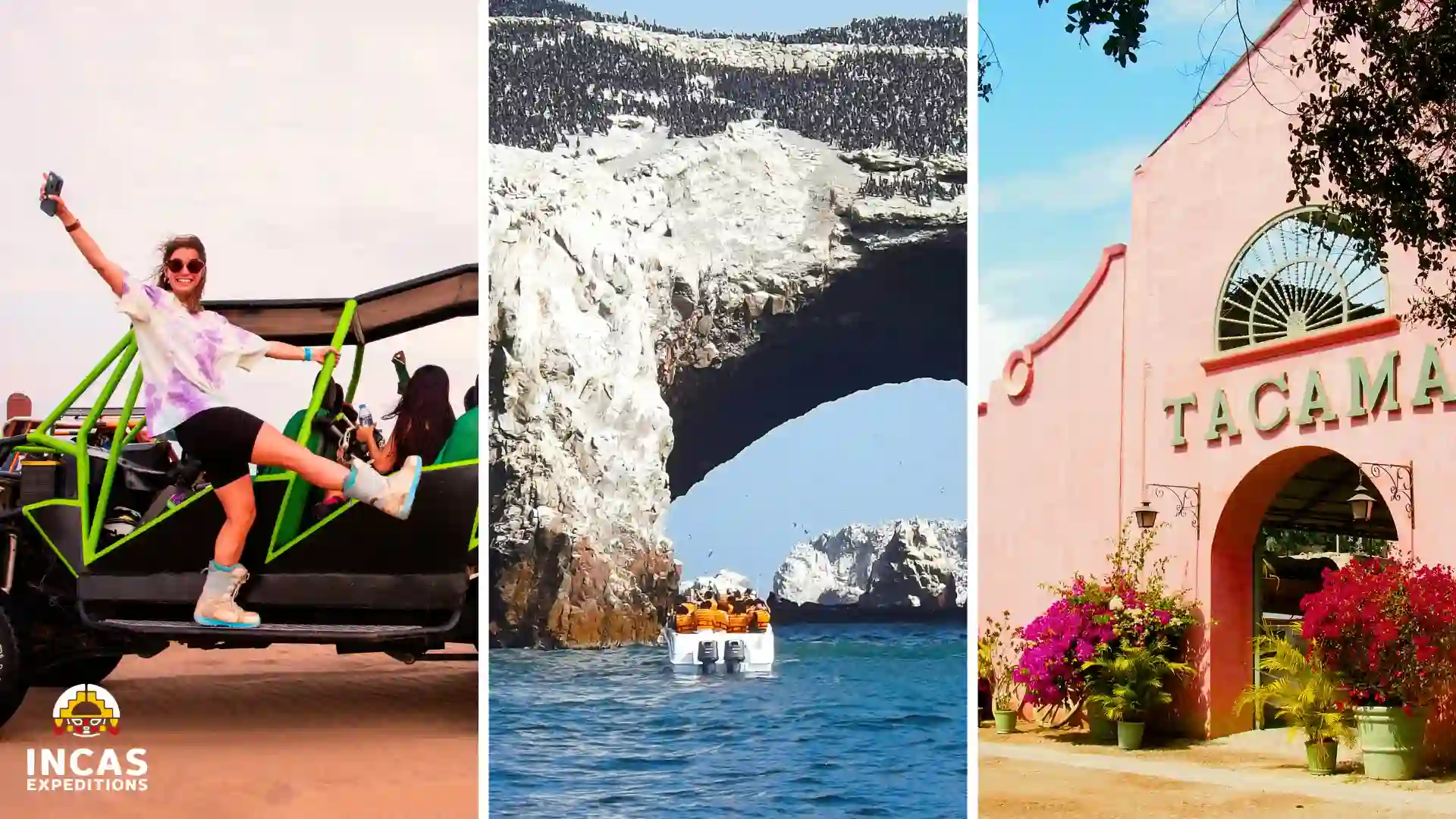
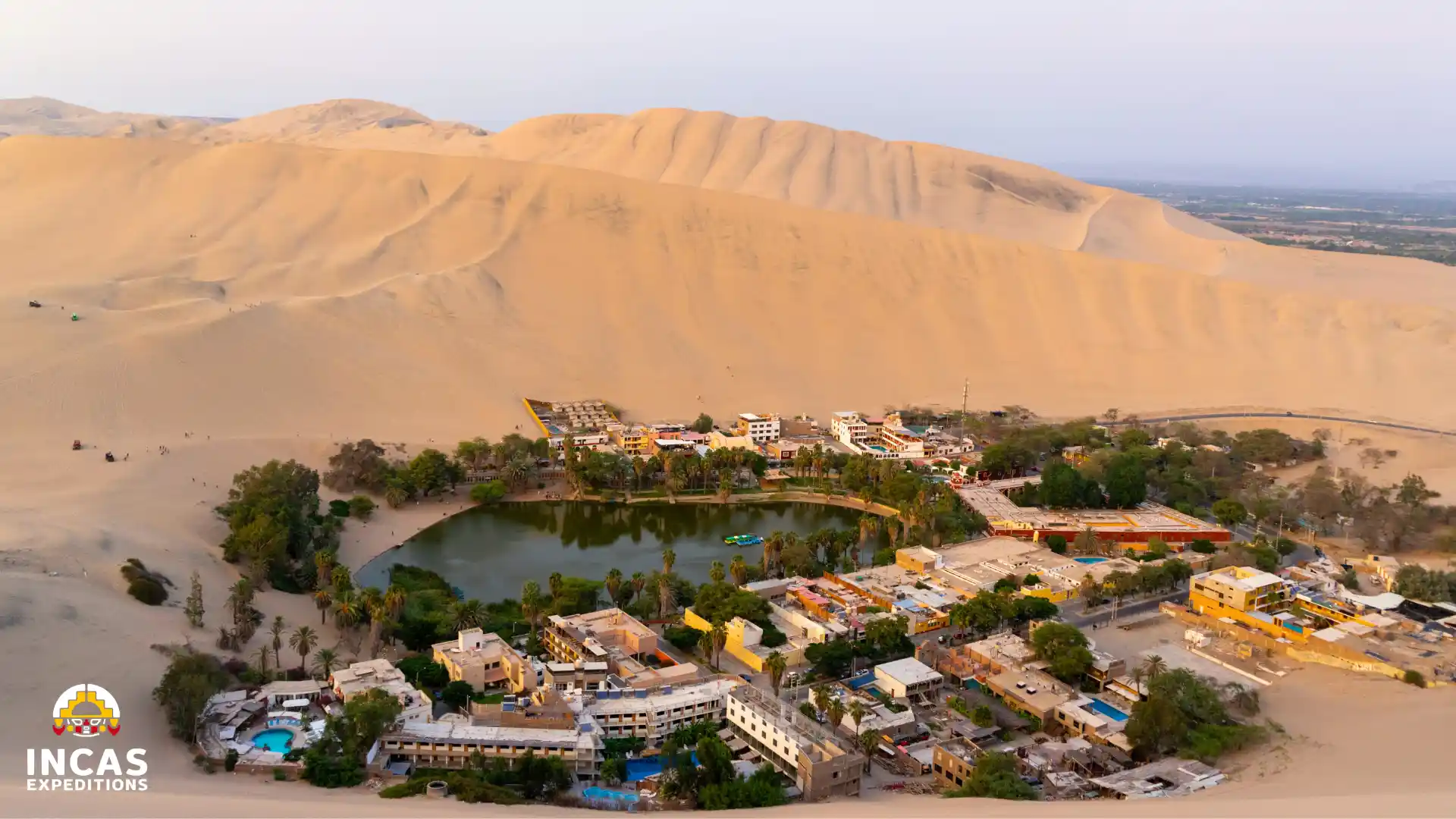
With these 10 things to do in Ica, I invite you to discover the City of Eternal Sun, a destination that offers much more than its famous Huacachina Lagoon. Between endless dunes, secluded beaches, and some of South America’s oldest wineries, like Tacama, there’s enough to fill several days of travel. Ica is ideal for both desert lovers and those who enjoy a good wine or pisco.
You may be interested: Yawar festival in Peru

10 things to do in Ica
10 things to do in Ica range from free experiences, like climbing a sand dune at sunset or wandering the illuminated shores of Huacachina lagoon, to extreme sports such as sandboarding and dune buggy rides across the desert. Whether the goal is an adrenaline rush or a quiet afternoon among the dunes, Ica offers something for every kind of traveler.
1. Sandboarding and dune buggy in Huacachina
Dune buggy and sandboarding tours are the most popular activity in Ica, combining a high-speed ride across the dunes with stops to slide down on a board. Tours generally run for around two hours and start either in the late morning or late afternoon. Reputable operators charge somewhere in the range of S/70 to S/90 ($20 to $25) per person for the standard two-hour combined tour.
This is one of the most important safety tips for Ica right now. Sandboarding and dune buggy activities inside the Huacachina area are regulated by the regional conservation authority (Área de Conservación Regional Laguna de Huacachina), which requires operators to be officially authorized to run tours on the dunes.
On top of this, informal, unregistered buggies without license plates, insurance, or proper documentation have been the target of recent police controls in the area following accidents. Before booking, it’s worth confirming that the agency is officially authorized to operate in Huacachina, either through your hotel, a licensed tour desk, or by asking to see the operator’s permit, rather than accepting an offer from an unmarked vehicle on the street.
2. Climb a sand dune for free
Not every dune experience requires a buggy. Walking up one of the tall dunes near the edge of Huacachina village is a free way to take in views of the oasis, the town of Ica, and the desert stretching out in every direction. The walk is short but harder than it looks, since the sand gives way with every step, so it’s worth allowing more time than expected to reach the top.
You may be interested: Complete Guide to Peru in January
3. Watch the sunrise or sunset over the dunes
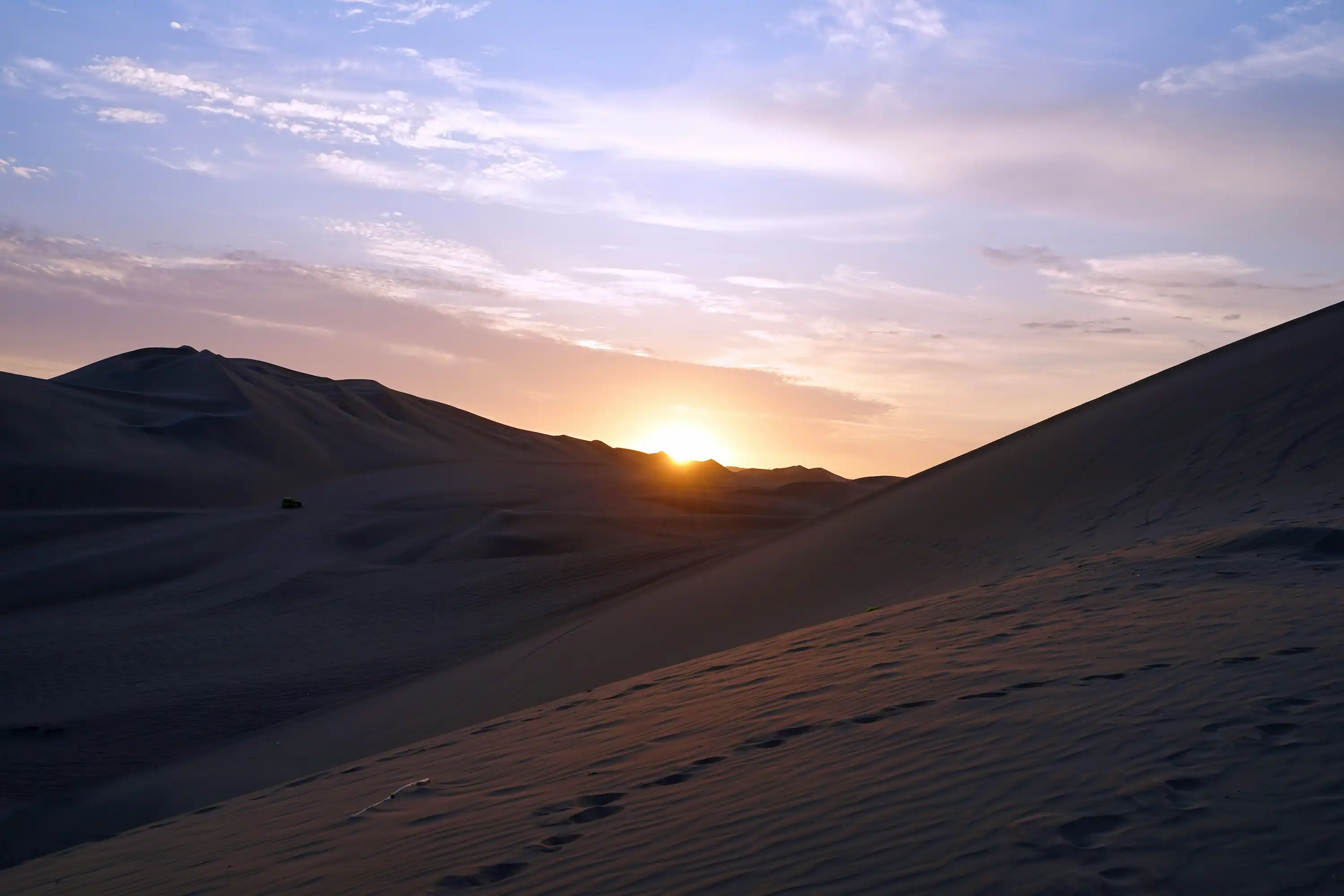
The desert light is at its best around sunrise and sunset, when the sand takes on a deeper golden tone. Afternoon buggy tours starting around 4pm are timed to end with sunset views over the dunes, since the sun typically sets around 6pm. Travelers staying overnight in Huacachina can also climb a dune before dawn for a quieter sunrise walk, with the added bonus of Huacachina’s clear desert skies for stargazing.
4. Wine and pisco tasting at Ica’s vineyards
Ica’s warm, sunny climate makes it one of Peru’s main wine and pisco producing regions, and its wineries tend to produce naturally sweeter wines than those from cooler regions. Tacama and Vista Alegre are among the most visited, offering guided tours through the vineyards and cellars followed by tastings, while El Catador and Lazo are smaller, family-run bodegas known for a more hands-on pisco tasting experience. Most tours include a walk through the vineyard, an explanation of the distillation process, and several samples of pisco, wine, and other regional spirits.

5. Explore the lost canyon in the desert
The Cañón de los Perdidos, located in the Ocucaje desert around two hours from Ica, is a canyon carved by an ancient river that dried up millions of years ago. The canyon stretches roughly 1.5 kilometers and reaches depths of up to 150 meters, with colored rock layers and marine fossils visible along the walk. Full-day tours typically leave Ica or Huacachina early in the morning, include a guided walk through the canyon floor, and often combine the visit with a stop at a nearby vineyard on the way back.
6. Boat tour to the Ballestas Islands
Often nicknamed the poor man’s Galapagos, the Ballestas Islands are only reachable by boat from Paracas and are home to large colonies of sea lions along with seabirds including Humboldt penguins, pelicans, and cormorants. On the way to the islands, boats pass the Candelabra, a large geoglyph carved into a coastal hillside whose origin remains unclear. Tours typically last around 90 minutes to two hours including transfer time, and depart from the pier at Paracas Beach in the morning, when the sea tends to be calmer. Sitting on the left side of the boat generally gives a better view of the islands during the approach.
7. Beach circuit in the Paracas National Reserve
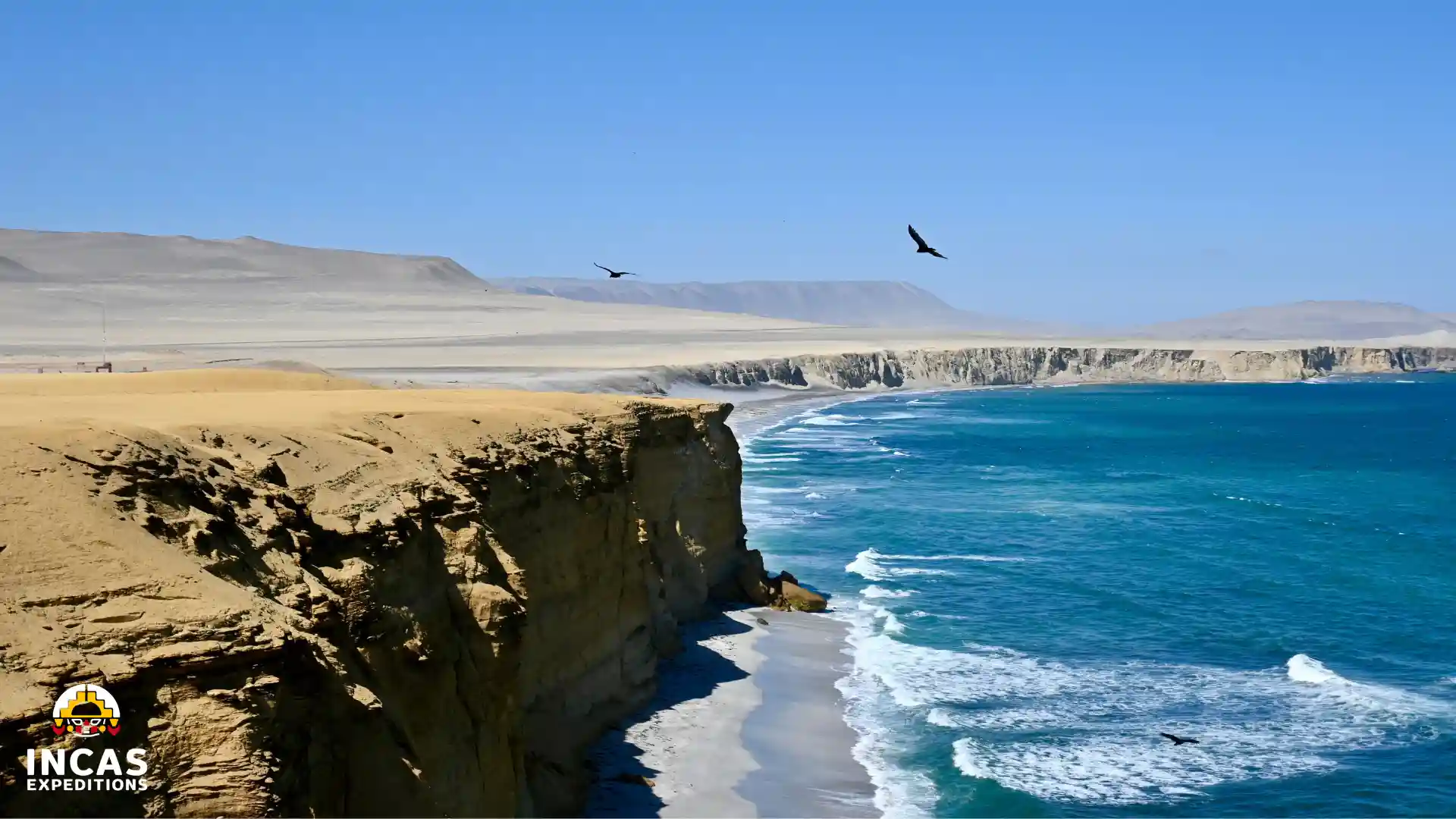
The Paracas National Reserve pairs some of the driest desert in the world with the Pacific coastline, and its beach circuit is usually explored by tour, bicycle, or private vehicle along the southern side of the peninsula. Playa Roja stands out for its reddish sand, the result of volcanic rock eroding over thousands of years, while Lagunillas and La Mina are popular for their calmer waters and small seafood restaurants.
8. Huacachina at night
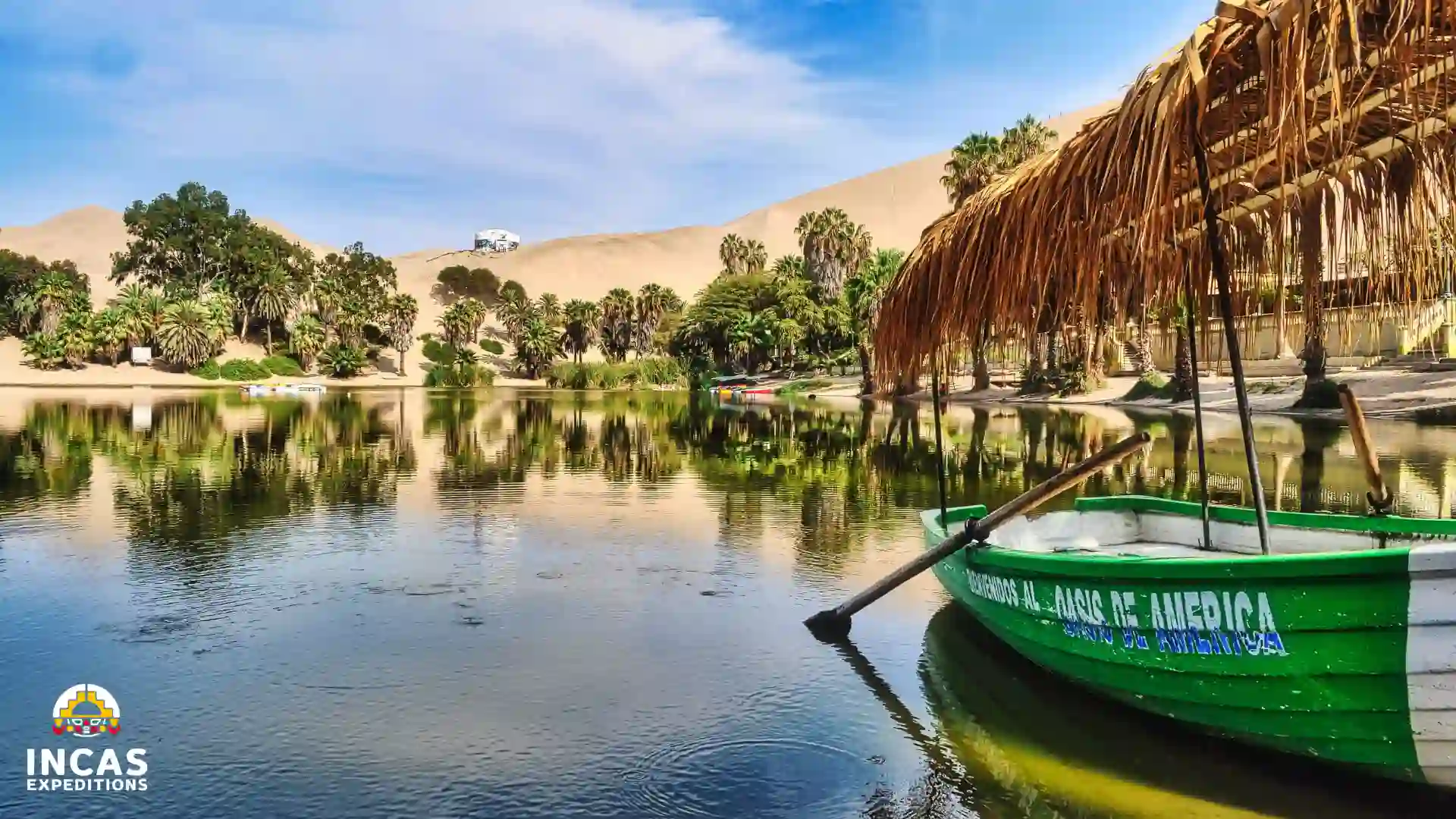
Once the sun sets, Huacachina takes on a different mood. Bars and rooftop terraces around the lagoon serve pisco sours and cold beer with views over the illuminated water, and the lack of light pollution makes the desert sky especially clear for stargazing. The atmosphere tends to be calm and low-key on weeknights, while weekends bring a livelier scene at the village’s most popular bars and hostels. Some operators also offer a combined evening tour that pairs a vineyard visit and pisco tasting with a stop at Huacachina after dark.
- Bars and rooftop terraces along the Malecón de la Huacachina, the palm-lined walkway circling the lagoon, serve pisco sours and cold beer with views over the illuminated water, making for a relaxed way to end the day.
- Wild Rover Huacachina is the most consistent party spot in the oasis, with a poolside bar, themed nights, and music running late. Banana’s Adventure Hostel, just down the road, offers a more laid-back tiki-bar setting for travelers who want to socialize without the all-night party pressure.
- The lack of light pollution around Huacachina makes the desert sky especially clear at night, ideal for stargazing away from the lagoon’s lights, particularly from the top of the surrounding dunes.
- The atmosphere tends to be calm and low-key on weeknights, while weekends bring a livelier scene at the village’s most popular bars and hostels.
- Some operators offer a combined evening tour that pairs a vineyard visit and pisco tasting with a stop at Huacachina after dark.
9. The witch legend of Cachiche
The small town of Cachiche, about 4 kilometers from downtown Ica, is tied to a centuries-old legend of women healers who practiced herbal medicine and folk rituals, some said to possess supernatural powers to cure illness and predict the future. The most famous of them, Julia Hernández Pecho, known as “Doctora Corazón,” died at the age of 106 and left behind a prophecy tied to the town’s landmark seven-headed palm tree: if the seventh trunk were ever allowed to grow, Ica would flood. In 1998, when the seventh head went uncut, the town was hit by severe flooding, a coincidence still talked about by locals today.
10. The Regional Museum of Ica
The Regional Museum of Ica, also known as the Adolfo Bermúdez Jenkins museum, brings together artifacts from five pre-Columbian cultures that once inhabited the region: Paracas, Nazca, Wari, Chincha, and Inca. Its best-known rooms hold Paracas funerary bundles and well-preserved mummies, along with feathered textiles, deformed skulls showing evidence of ancient cranial surgery, and a small-scale model of the Nazca Lines. Entry costs around S/5 to S/7 depending on the source, with reduced rates for students and children, and a full visit takes around 1.5 to 2.5 hours.
Where to stay in Ica
Huacachina for dune views and nightlife
Staying right in the oasis puts sandboarding, dune buggy tours, and the lagoon’s bars and restaurants within walking distance, making it one of the most convenient bases for things to do in Ica. Wild Rover Huacachina and Banana’s Adventure Hostel are popular budget-friendly picks with pools and a social atmosphere, while the Senoma Hotel offers a quieter, adults-only setting for couples. DM Hoteles Mossone, right on the lagoon, is one of the area’s most established mid-range choices, with two pools and rooms overlooking the water.
Ica city for value and easy access to the wineries
The city center offers a wider range of hotels at lower prices than Huacachina, along with easy access to the Regional Museum and the main vineyards. Hotel Las Dunas is a well-known family resort with a spa, minigolf, and multiple pools, while Hotel El Huacachinero and Gran Hotel Ica offer solid mid-range comfort closer to downtown.
Bungalows and glamping near the dunes
For a more nature-focused stay, several properties around Huacachina offer bungalow or glamping-style accommodation instead of standard hotel rooms. Options such as Viñedo Sotelo, which combines glamping tents with a pool, and Ecocamp Huacachina give travelers a chance to sleep closer to the desert landscape without giving up basic comforts.
Tips for visiting Ica safely
- Book sandboarding and buggy tours with licensed operators only: This is the most important safety tip for Ica right now. In July 2026, police removed informal dune buggies without license plates, insurance, or proof of origin from Huacachina’s Tierra Prometida sector, following an accident. Around 350 informal buggy companies are known to operate in the area, and one has already been sanctioned by Indecopi after a tourist’s death. Book only with formal, insured operators that use certified drivers, seatbelts, and roll cages.
- Choose the lying-down position for sandboarding: Lying face down on the board is the easier, safer option, especially for anyone without snowboarding experience. Standing up requires real skill and carries a higher fall risk on Ica’s steep dunes.
- Time your dune buggy tour for sunset: Tours starting around 4pm combine the buggy ride and sandboarding with a desert sunset around 6pm. If staying overnight, an early morning walk up a dune near the village offers free sunrise views over the oasis and desert.
- Choose a reliable operator for the Nazca Lines flight: Past safety incidents have mostly involved smaller, poorly regulated operators, so book with an established airline. The viewing tower on the Panamericana Sur is a ground-level alternative for seeing three of the figures.
- Keep one reserve entrance ticket for both stops in Paracas: The entrance fee to the Paracas National Reserve is paid once, so hold on to your ticket if visiting both the peninsula beaches and the Ballestas Islands.
- Pack light layers and sun protection: Strong daytime sun and windy boat tours call for a light jacket, sunscreen, and a hat, regardless of season.
Frequently asked questions
Planning a trip usually raises a few practical questions once the main things to do in Ica are picked out. Here are quick answers to what travelers ask most often before visiting.
1. What is the best time of year to visit Ica
Ica has a warm, dry climate year round, with the most comfortable temperatures between December and March, along with clearer skies for Nazca flights and stargazing in Huacachina.
2. How many days do you need in Ica
Two to three days cover the main highlights: Huacachina and the dunes, a wine or pisco tour, and a trip to Paracas for the Ballestas Islands and the national reserve beaches. Add an extra day for a Nazca flight or the Cañón de los Perdidos.
3. Is Ica safe for tourists
Ica’s main tourist areas, Huacachina, the wineries, and Paracas, are generally safe and well set up for visitors. The main thing to watch for is informal, unlicensed dune buggy operators in Huacachina, so book sandboarding and buggy tours through a licensed, insured company.
4. How much does sandboarding and dune buggy cost in Huacachina
Prices with reputable operators typically range from S/70 ($20) to S/90 ($25) per person for a two-hour tour that includes both the buggy ride and sandboarding stops.
5. What is the difference between the Ballestas Islands and Paracas National Reserve
The Ballestas Islands are only reachable by boat and are home to sea lion colonies and seabirds, including Humboldt penguins. The Paracas National Reserve is the mainland protected area, with beaches such as Playa Roja and Lagunillas, best explored by tour, bicycle, or private vehicle.
6. Is it worth flying over the Nazca Lines
For travelers with the time and budget, a flight is the only way to fully appreciate the scale of the geoglyphs, since most are too large to interpret from the ground. Choosing an established operator with a strong safety record matters most.
7. What food should you try in Ica
Regional dishes worth trying include carapulcra, sopa seca, and pisco-based cocktails from the local wineries, alongside seafood near the coast in Paracas.
