Start a Conversation
Hello! Have questions about our destinations? Chat with one of our team members on WhatsApp
Start a Conversation
Hello! Have questions about our destinations? Chat with one of our team members on WhatsApp
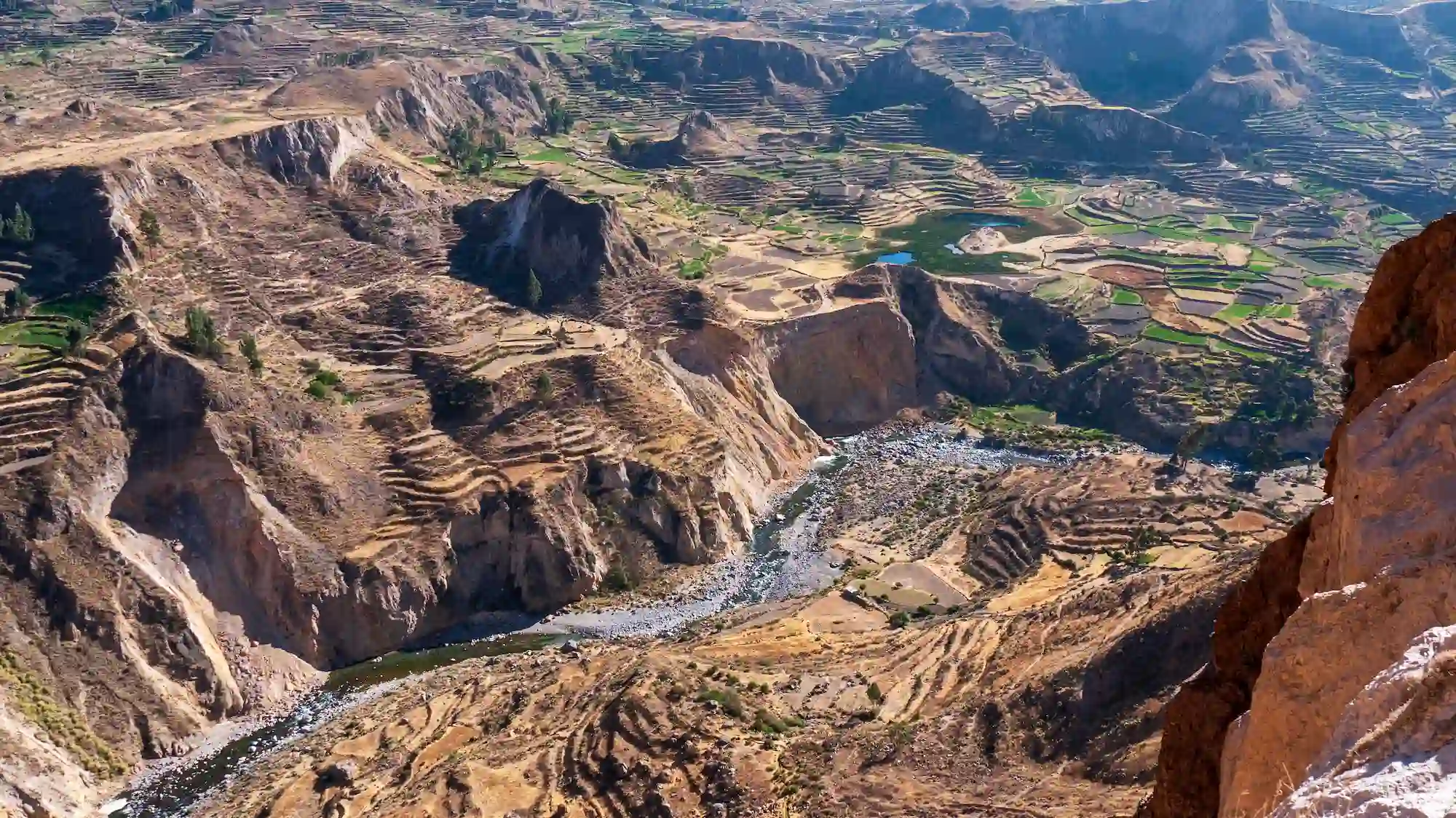
Plunge into Colca Canyon, one of the deepest canyons on Earth at nearly 3,270 meters, more than twice the depth of the Grand Canyon. Watch condors glide over ancient stone terraces as expert local guides handle every detail. Reserve your Colca Canyon tour today and see this natural wonder for yourself!
Our tours to Colca Canyon take you along the rim of one of the deepest canyons on the planet, where condors soar and centuries old terraces climb the mountainside. Book your spot now and start planning the trip you’ll be talking about all year.
If you want to stand at the edge of a canyon twice as deep as the Grand Canyon and watch condors glide just meters above your head, this is the trip. Colca Canyon is not only a natural wonder, it is also a living record of pre-Inca terraces still farmed today and villages where centuries-old traditions continue as part of daily life.
Real feedback from travelers who joined us, in their own words. From first light at Cruz del Condor to the walk through Yanque and Maca, these reviews show what a guided visit to this corner of the Andes actually feels like, on the good days and the tiring ones.
Posted on TripadvisorVerified "Amazing experience with Incas Expeditions on the Slcante Trek. From the logistics to the knowledgeable guides, everything was planned out. We were able to fully appreciate the region's rich history and scenic splendor during the walk. Great value for a once-in-a-lifetime experience. Highly recommended for hikers of all skill levels.Posted on TripadvisorVerified An Unforgettable Journey Through Cusco. Incas Expeditions went above and above! Transportation, lodging, and guiding were excellent, and their staff made everything run smoothly from the minute we arrived in Cusco. Every ruin was brought to life with stories by our guide, who was quite educated about Inca history. Highlights of my trip included the walk to Machu Picchu and the Sacred Valley excursion. Throughout the entire process, I felt motivated, informed, and safe. Excellently suggested.Posted on TripadvisorVerified Amazing Inca Trail Salkantay Trek tour with friends I booked with my friends the Inca Trail Salkantay Trek tour with a group of friends and it was an experience that changed my way of seeing the Andean tours. The first day we walked around the city of Cusco and started the Inca Trail and camped at night but one of my friends got hurt during the last day in the Salkantay Pass and the guides were ready with their first aid kit and the attention was great! I recommend you to have a good stamina for this kind of multi-day treks. This tourism agency in Cusco is the best for trekking to Machu Picchu, thank you very much Incas Expeditions!Posted on TripadvisorVerified The best travel guide We traveled with our teenage children and chose the short Inca trail with camping because it offered the right balance of adventure and comfort. It was our kids' first time camping and they loved it! The porters and guides were very friendly and always made sure we were ok. The trail itself was breathtaking, especially the views of Wiñay Wayna. At night, we stargazed and shared stories by the tent. I want to thank Incas Expeditions who took care of the logistics and even the food! My family and I will be returning to Cusco in a few months and we are happy to do the tour with you again :)Posted on TripadvisorVerified My experience on the Cusco day tour I'm going to tell you about my experience with Incas Expeditions. The truth is that they exceeded all my expectations. From the moment I arrived in Cusco, everything was perfectly organized. The guides were not only professional but also incredibly passionate about Peruvian culture and history, which made each tour feel personal and unique. They were also very attentive and helped me arrange some free time to explore on my own, which I truly appreciated. If you're looking for Peru tour packages, Incas Expeditions is, without a doubt, the best option. An incredible experience from start to finish!Posted on TripadvisorVerified An unforgettable trip to Machu Picchu My partner and I had always dreamed of visiting Machu Picchu, but we wanted to make this experience something unique. From the first contact with Incas Expeditions, everything was perfect. The team was incredibly attentive and helped us create a personalized itinerary that suited our preferences, and the guides explained the history and even taught us a little Quechua. Arriving at Machu Picchu was a dream come true, and having the opportunity to explore it so intimately on our personalized tour was something we will never forget. We definitely recommend Incas Expeditions to any couple who wants to experience the magic of Machu Picchu in a unique and worry-free way.Posted on TripadvisorVerified This was the best and most amazing tour. This was the best and most amazing tour. I wonder how I hadn't come across it sooner. Everything they did was perfect, from the accommodation to the hospitality—they did a great job.Posted on TripadvisorVerified We both enjoy this tour together with our kids. We both enjoy this tour together with our kids. It was an awesome feeling and experience. Guide were friendlily from the beginning to the end and we were took to my place. They're the best.
Booking a trip to one of the deepest canyons on earth raises a lot of questions. Here are honest answers to what travelers ask most before joining a Colca Canyon tour.
Colca Canyon is in the Arequipa region of southern Peru, about 160 km (three to four hours by road) northwest of Arequipa city. Altitude climbs fast along the way, from 2,325 meters in Arequipa to nearly 4,900 meters at the Patapampa pass, so it’s worth acclimatizing for a day before heading up.
Most standard Colca Canyon tours work well for families, since they focus on viewpoints, villages, and condor watching rather than long hikes. The altitude, which reaches close to 4,900 meters at the Patapampa pass, is the main factor to plan around, so allowing a day to acclimatize in Arequipa first is recommended for children and adults alike.
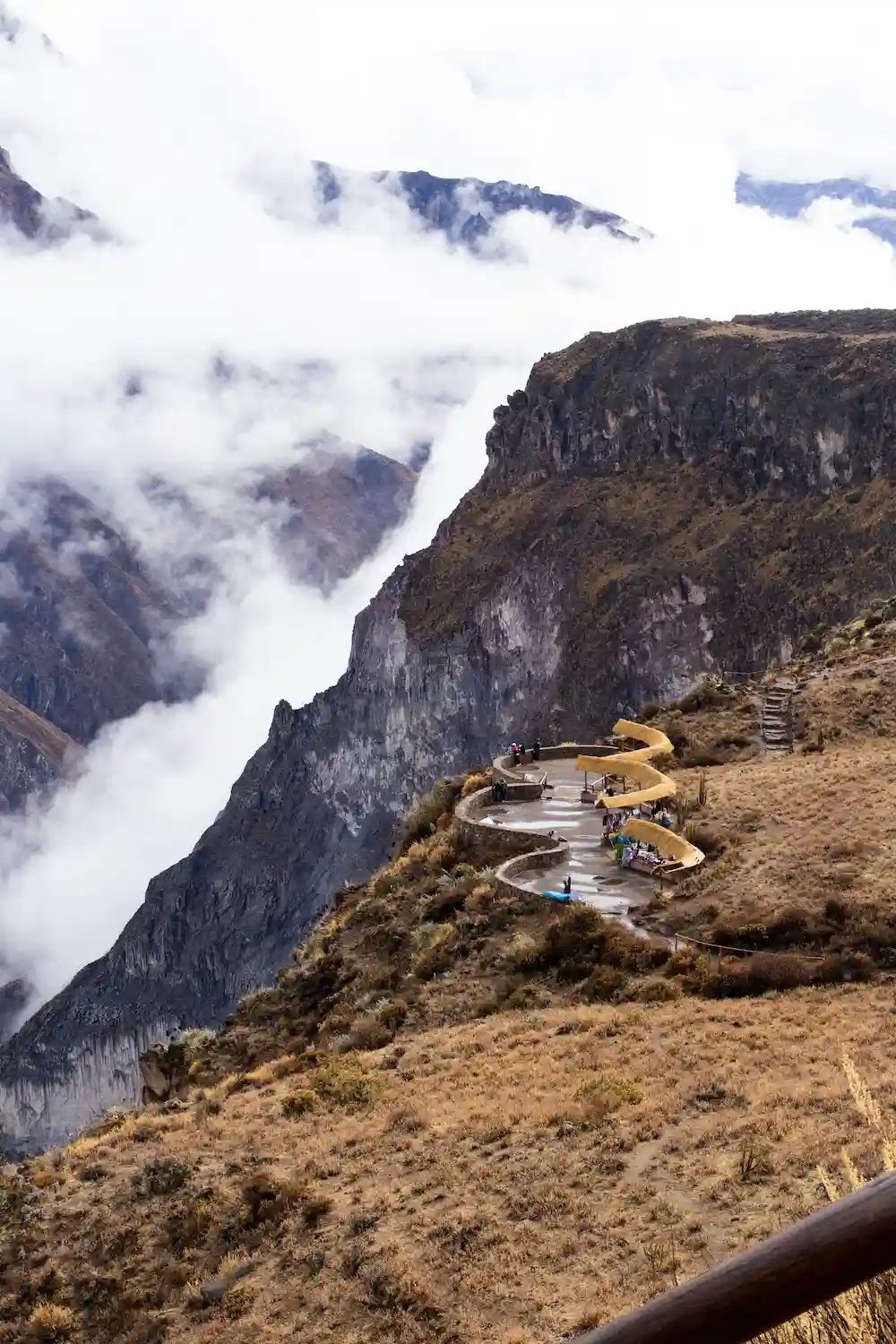
Yes, nearly every Colca Canyon tour includes a stop at Cruz del Condor, the most reliable viewpoint in South America for spotting Andean condors. Condors rise on thermal air currents shortly after sunrise, so tours schedule the visit between 8 and 10 am, when sighting chances are highest. During the dry season, from May to September, the success rate is around 80 to 90 percent thanks to clearer skies and stronger thermals. Sightings are still possible the rest of the year, just less predictable.
It depends on which version you book. A classic one or two day Colca Canyon tour that focuses on Cruz del Condor and the surrounding villages involves mostly short walks and is manageable for most fitness levels, though the altitude (Cruz del Condor sits above 3,200 meters) can leave some travelers short of breath. A Colca Canyon trek down to the Sangalle Oasis is a different story: the descent is steep and hard on the knees, and the climb back out the next morning is a demanding uphill zigzag before the sun gets too strong.
Most Colca Canyon tours from Arequipa run by private or shared tourist van, with a bilingual guide on board. The drive to the canyon area takes around three to four hours each way, crossing the Patapampa pass at nearly 4,900 meters before descending into the valley.
The dry season, from April to November, is the best time for a Colca Canyon tour, with May to September offering the clearest skies and the most reliable condor sightings. The rainy season, from December to March, turns the valley green and trims the crowds, but trails get slippery and condor flights become less predictable.