


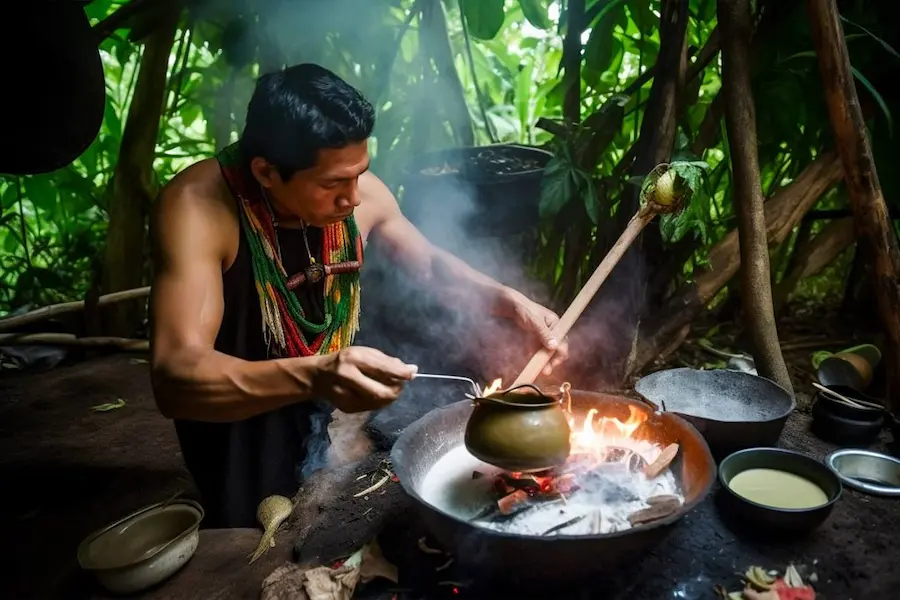
Ayahuasca is one of the best-known traditional plant practices associated with the Amazon, but its meaning goes far beyond the drink itself. For generations, Indigenous communities across the Amazon have incorporated ayahuasca into traditions connected with healing, spirituality, knowledge, and relationships with the natural world. In Peru, these practices are particularly significant because they form part of the cultural heritage of several Amazonian communities.
Although ayahuasca has gained international attention in recent decades, its history did not begin with modern tourism or contemporary interest in psychedelic experiences. Its roots are connected to Indigenous knowledge systems that developed within the Amazon and were passed down through generations. Different communities have developed their own ways of understanding and using the plant, which means there is no single ayahuasca tradition shared by every Amazonian people.
Where does it come from, and why is it culturally important in Peru? Understanding these questions requires looking beyond its modern reputation and exploring the traditions, languages, and Indigenous knowledge surrounding it.
You might be interested in reading: Nightlife in Cusco Guide 2026
What Does Ayahuasca Mean?
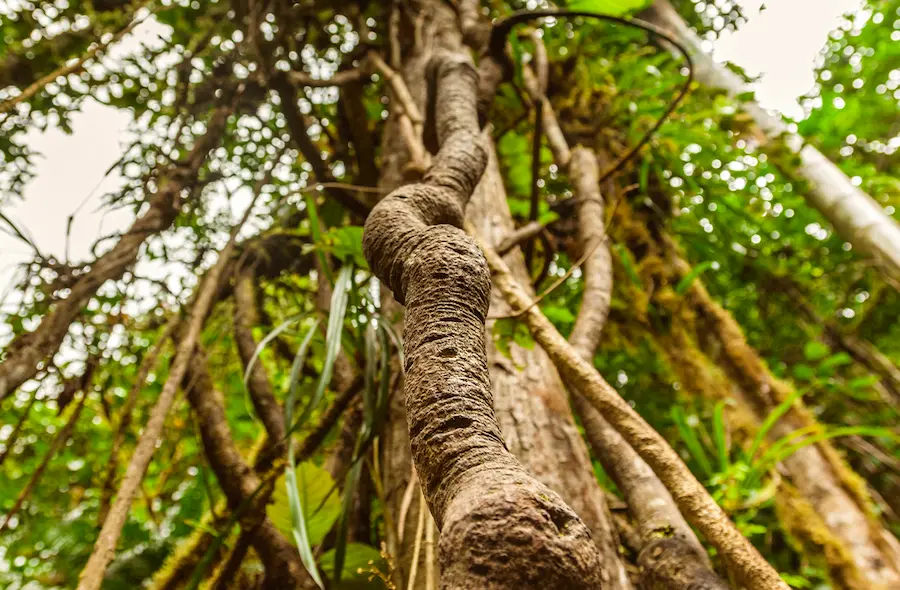
The word ayahuasca comes from Quechua and is generally understood as a combination of aya, referring to the soul, spirit, or the dead, and waska, meaning vine or rope. It is therefore often translated as “vine of the soul” or “vine of the dead.”
The name itself reflects the spiritual associations that have surrounded the plant. However, it is important to remember that the word ayahuasca is not necessarily the name used by every Indigenous community that works with the plant. Across the Amazon, the preparation has different names and may be understood through very different cultural traditions.
You might be interested in reading: Feast of Saint Rose of Lima 2026
Where Did Ayahuasca Originate?
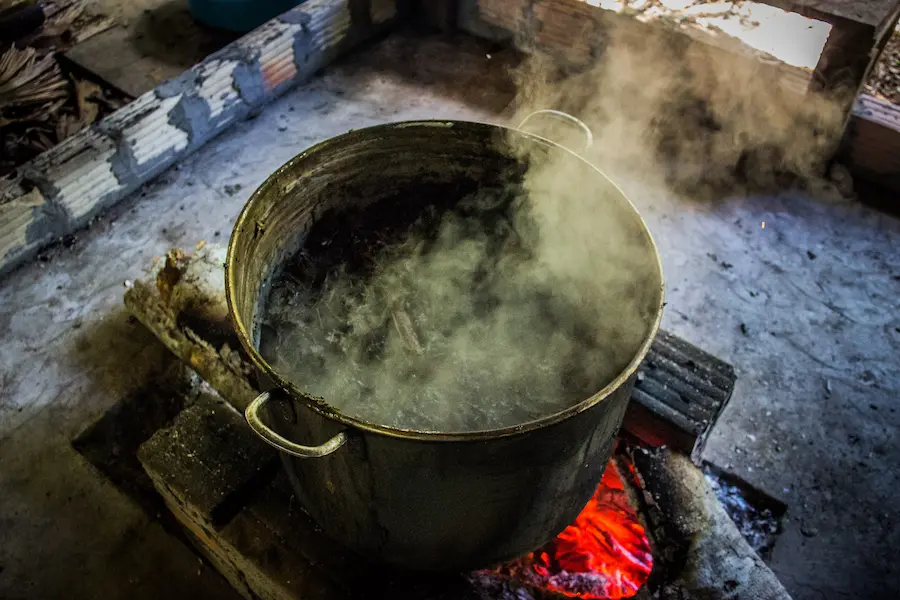
The origins of ayahuasca are difficult to trace to a single place or a particular Indigenous group. Researchers generally associate its traditional use with the Amazon Basin, where Indigenous peoples have developed extensive knowledge of medicinal and psychoactive plants over centuries.
There is evidence suggesting that plants associated with ayahuasca have been used by Amazonian peoples for a very long time, although the exact history of the preparation remains uncertain. Archaeological evidence and historical research point to a deep relationship between Amazonian societies and these plants, but there is no definitive record identifying one community.
Ayahuasca’s Origins in the Amazon Basin
The Amazon Basin is widely associated with the traditional origins of ayahuasca. The region extends across several South American countries and has long been home to Indigenous communities with extensive knowledge of the plants found in the rainforest.
Within these cultures, knowledge of plants was developed and passed down through generations. Ayahuasca emerged within this broader Amazonian tradition of working with plants for medicinal, spiritual, and ceremonial purposes.
Indigenous Traditions Across the Amazon
Ayahuasca does not have a single documented Indigenous origin. Instead, its history is connected to different Indigenous peoples throughout the Amazon, each with their own traditions, names, beliefs, and ways of preparing and using the plants.
This diversity makes it difficult to attribute ayahuasca to one specific community or location. Rather than belonging to a single culture, its traditional history reflects the rich and varied plant knowledge that developed among Amazonian peoples over generations.
A Tradition Rooted in Amazonian Plant Knowledge
The long history is closely connected to the broader knowledge Indigenous communities developed about Amazonian plants. This knowledge includes understanding how different plants can be combined, prepared, and incorporated into traditional practices.
For this reason, the origins of ayahuasca are better understood as part of the broader cultural and botanical knowledge of the Amazon, rather than as an invention attributed to one individual, civilization, or Indigenous group.
You might be interested in reading: 15 must-see markets in Peru
The Cultural Significance in Peru
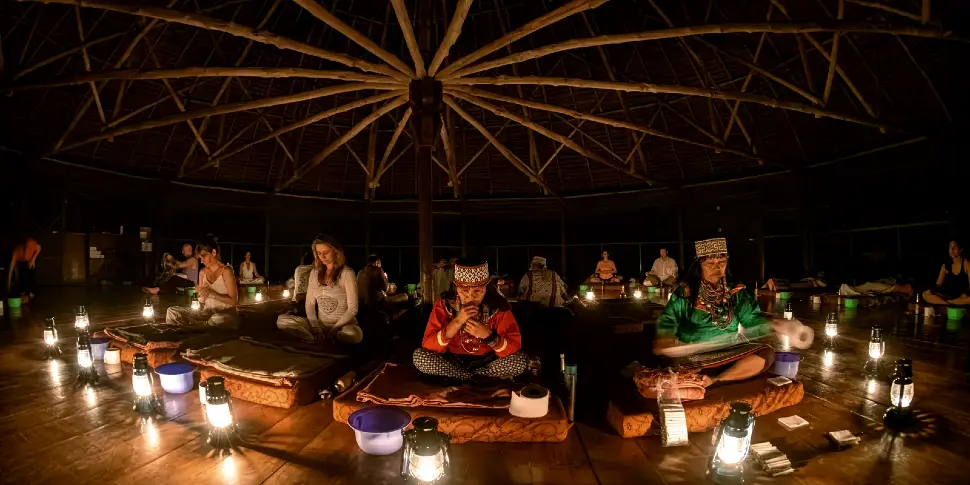
The importance of ayahuasca in Peru is not simply related to its effects. Its cultural value comes from the knowledge, traditions, and relationships that surround its use.
For Indigenous communities, traditional plant practices can represent a way of preserving knowledge about nature, health, spirituality, and community life.
A Connection Between People and Nature
Amazonian cultures have developed detailed knowledge of the plants, animals, rivers, forests, and landscapes around them. Within these worldviews, nature is not necessarily viewed as something separate from human life.
Ayahuasca is part of some of these relationships between people and the natural environment. Its cultural meaning therefore extends beyond the plant itself and into a broader understanding of the Amazonian world.
Knowledge Passed Down Through Generations
Traditional knowledge is often transmitted through generations rather than through written manuals or formal institutions.
Learning about medicinal plants, rituals, songs, diets, and ceremonial practices can take years and may involve guidance from experienced members of a community.’
A Practice Connected to Identity
For some Indigenous peoples, traditional ayahuasca practices are connected with cultural identity and continuity.
The Peruvian government recognized this importance in 2008 by declaring the traditional knowledge and uses of ayahuasca practiced by native Amazonian communities as Cultural Heritage of the Nation. The declaration specifically emphasizes the continuity of cultural knowledge and traditions.
What Is Ayahuasca Made From?
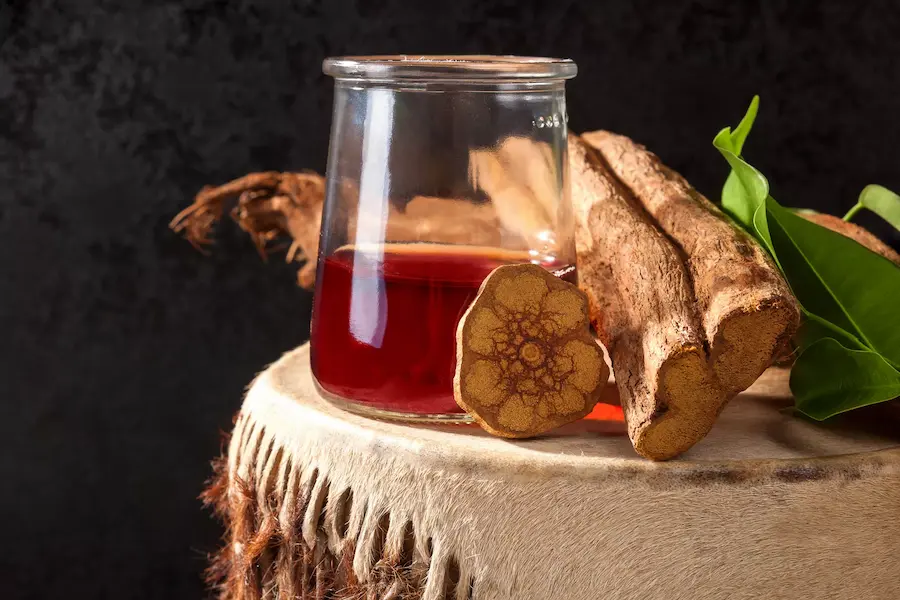
Although recipes vary between traditions, ayahuasca is commonly associated with the vine Banisteriopsis caapi and another plant, often Psychotria viridis, commonly known as chacruna. Different preparations may include additional plants depending on the cultural tradition and purpose of the ceremony.
Banisteriopsis caapi
Banisteriopsis caapi is a climbing vine native to the Amazon and is one of the principal plants associated with ayahuasca.
The vine is especially important because of the compounds it contains, which interact with other components of traditional preparations.
Chacruna and Other Plants
Psychotria viridis, or chacruna, is commonly included in some traditional preparations. It contains DMT, a psychoactive compound responsible for much of the altered perception associated with ayahuasca.
However, not every preparation is identical. The plants used and the way they are prepared can vary according to local traditions and knowledge.
You might be interested in reading: 6 Beautiful Churches in Cusco to visit
How Did Ayahuasca Become Known Around the World?
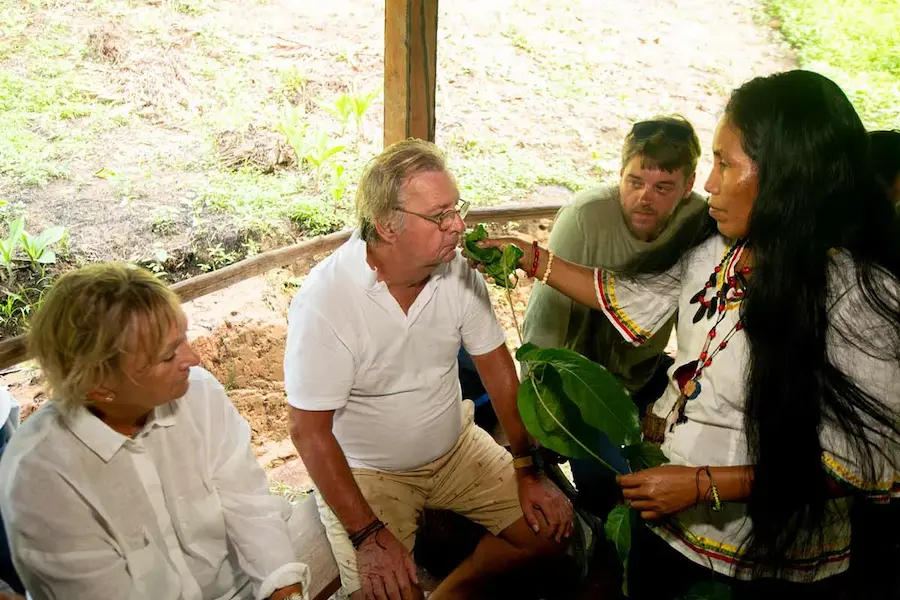
For centuries, ayahuasca remained closely connected to the Indigenous communities of the Amazon, where its traditional uses were preserved through generations. Its recognition beyond the region developed much later, as travelers, researchers, anthropologists, and religious movements began documenting Amazonian traditions and bringing greater attention to the plants and practices.
During the twentieth century, interest gradually expanded beyond South America. Academic research and written accounts introduced ayahuasca to wider audiences, while its association with spirituality and altered states of consciousness eventually contributed to its growing international visibility.
Early Encounters With Amazonian Traditions
The first accounts that introduced ayahuasca to audiences outside the Amazon came through travelers, missionaries, researchers, and other visitors who documented Indigenous and local practices.
As these accounts circulated, they provided outsiders with information about plant-based traditions that had previously been largely known within Amazonian communities. However, many early descriptions were written from an outside perspective and did not always capture the cultural meaning of these practices in their original context.
Scientific and Anthropological Research
During the twentieth century, researchers began studying ayahuasca more systematically. Anthropologists documented its role in different Amazonian societies, while scientists investigated the plants used in traditional preparations and their effects on the human body and mind.
This research helped introduce ayahuasca to academic and international audiences while also highlighting the diversity of traditions surrounding it.
The Growth of International Interest
From the late twentieth century onward, ayahuasca began attracting increasing interest outside the Amazon. People from different parts of the world became interested in its traditional, spiritual, and psychological dimensions, contributing to its presence in international discussions about Indigenous knowledge, spirituality, and consciousness.
This growing interest eventually extended into tourism, research, and contemporary spiritual practices, making ayahuasca far more widely known than it had been in previous generations.
You might be interested in reading: World Folklore Day in Peru
Common Misconceptions About Ayahuasca
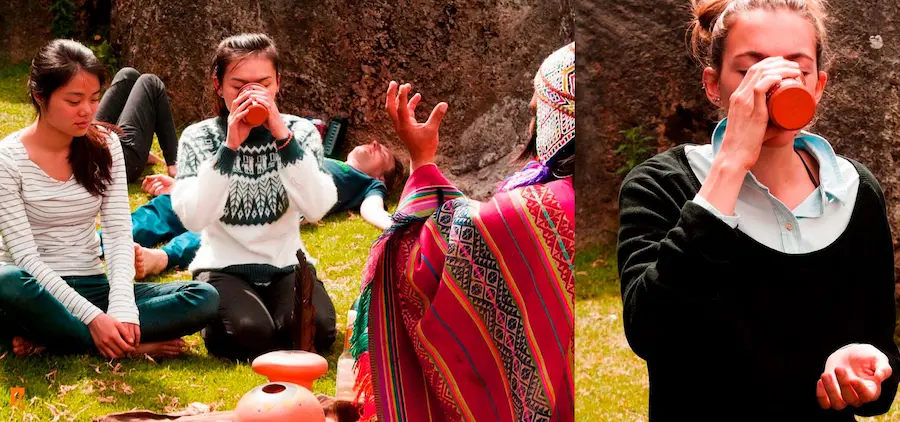
As ayahuasca has become more widely known outside the Amazon, many simplified ideas about the practice have also emerged. Some describe it only as a psychedelic drink, while others associate it exclusively with a particular Indigenous culture or spiritual tradition. In reality, ayahuasca has a much more diverse and complex history. Understanding these misconceptions can provide a clearer picture of its cultural significance and traditional use.
Ayahuasca Does Not Come From a Single Indigenous Culture
Ayahuasca is often associated with a specific Amazonian people, but its traditional history involves different Indigenous communities across the Amazon Basin. These communities have developed their own names, beliefs, ceremonies, and ways of working with the plants.
Rather than belonging to one particular culture, ayahuasca is part of a diverse Amazonian heritage shaped by different traditions over generations.
Ayahuasca Is More Than a Psychoactive Drink
Modern discussions often focus on the altered states of consciousness associated with ayahuasca. While these effects are part of its contemporary reputation, they do not fully explain its importance within Indigenous cultures.
Traditionally, ayahuasca can be connected with healing, spirituality, knowledge, community practices, and relationships with the natural environment. Its meaning depends greatly on the cultural context in which it is used.
There Is No Universal Ayahuasca Preparation
Another common misconception is that every ayahuasca preparation is made in exactly the same way. In reality, the plants used, preparation methods, ceremonial practices, and interpretations can vary between communities and regions.
Although Banisteriopsis caapi is commonly associated with ayahuasca, other plants may be included depending on the specific tradition. This diversity reflects the different bodies of Indigenous knowledge that have developed throughout the Amazon.
Ayahuasca Is Not a Modern Spiritual Practice
Although ayahuasca has become increasingly popular in contemporary spiritual and wellness circles, its traditional use predates this international interest by many generations.
Its roots are found in Indigenous Amazonian traditions, where knowledge surrounding the plants has been transmitted over time. The modern global interest in ayahuasca is therefore a relatively recent chapter in a much longer cultural history.
Its Cultural Meaning Goes Beyond Its Effects
Focusing exclusively on the effects of ayahuasca can overlook the traditions and communities behind it. For many Indigenous peoples, its significance is connected to systems of knowledge, cultural identity, traditional medicine, and relationships with the natural world.
For this reason, understanding ayahuasca requires looking not only at what it does, but also at the people, traditions, and cultural knowledge that have preserved its use across generations.
Frequently Asked Questions About Ayahuasca
What does ayahuasca mean?
The word ayahuasca comes from Quechua and is generally interpreted as “vine of the soul” or “vine of the dead,” combining aya with waska, meaning vine or rope.
Where does ayahuasca come from?
Ayahuasca is traditionally associated with the Amazon Basin. Its exact origins are difficult to determine, and there is no definitive evidence that it was invented by a single Indigenous group.
Is ayahuasca part of Peruvian culture?
Yes. Traditional ayahuasca knowledge and practices among native Amazonian communities were declared Cultural Heritage of the Nation in Peru in 2008.
What plants are traditionally associated with ayahuasca?
The preparation is commonly associated with Banisteriopsis caapi and, in many traditions, Psychotria viridis, also known as chacruna. Other plants may be included depending on the local tradition.
Do all Amazonian communities use ayahuasca in the same way?
No. Different Indigenous communities have their own traditions, beliefs, ceremonial practices, and interpretations. There is no single Amazonian tradition that represents every community.
Why is ayahuasca culturally significant in Peru?
Its importance comes from the traditional knowledge and practices surrounding it, including relationships with healing, spirituality, community, nature, and cultural identity.
Is ayahuasca only associated with spirituality?
Not necessarily. Depending on the community and tradition, ayahuasca can be connected with traditional medicine, knowledge, social practices, spirituality, and other aspects of Indigenous culture.
