


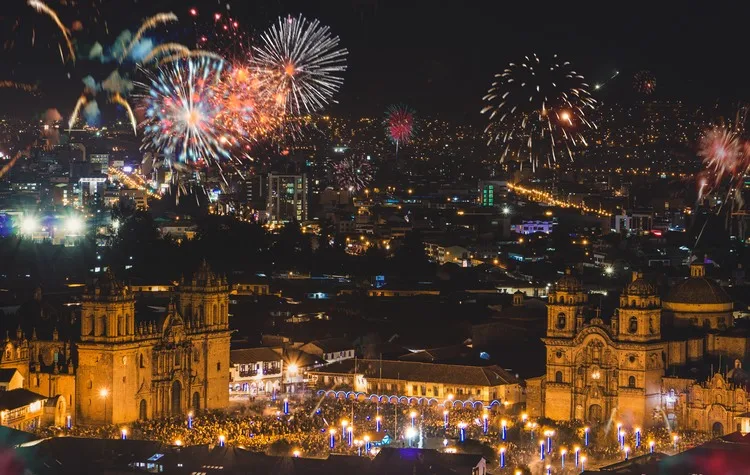
The celebration of New Year in Peru is experienced in a different way, the transition into 2026 fuses ancestral Andean traditions with Spanish colonial customs that all Peruvians are proud to keep alive. From high-altitude celebrations in Cusco’s Plaza de Armas to beachside parties on Lima’s Pacific coast, Peruvians welcome the new year with contagious energy that blends family gatherings, elaborate superstitions, world-class gastronomy, and street celebrations lasting until dawn, so in this article we’ll show you the best places to celebrate, the most authentic traditions, and everything you need to know to live an unforgettable New Year’s experience.
You’ll discover how Peruvians practice their famous cábalas to attract luck and prosperity, where to find the best gala dinners, which are the most iconic spots to watch fireworks, and how to immerse yourself in celebrations ranging from ancestral Pachamama gratitude rituals to electronic parties at beach clubs that don’t end until the first sunrise of the year.
When is New Year’s celebrated in Peru?
New Year’s Eve in Peru is celebrated on December 31st, just like in many countries around the world. The celebration stretches into January 1st, marking the beginning of the new year with festivities, fireworks, and vibrant traditions. The main focus of this celebration is to spend time with family and friends, reflect on the past year, and look forward to a prosperous future.
Is New Year Day a public holiday in Peru?
Yes, January 1st is a public holiday in Peru, which means that most businesses, schools, and government offices will be closed. This is a day for relaxation and spending time with loved ones. Many Peruvians travel to visit family, enjoy traditional meals, and rest after the festivities of the night before.
You may be interested: The Lord of Miracles Peru
Peru New Years traditions
New Year in Peru is one of the most anticipated celebrations of the year, packed with traditions, superstitions, and rituals designed to attract prosperity, good luck, and abundance for the coming cycle. Beyond the famous customs like the 12 grapes, burning the rag doll, and colored candles, one deeply symbolic figure takes center stage during this time: the Ekeko, a small character representing prosperity and abundance. Here’s what you need to know about the Ekeko and other New Year traditions.
1. The Ekeko: Symbol of prosperity and abundance
The Ekeko is a traditional Peruvian figure that embodies abundance, prosperity, and good fortune. According to Andean mythology, the Ekeko is a small god of abundance who brings gifts and luck to those who honor him. During New Year in Peru, Ekeko figurines appear in homes throughout the country, especially in Cusco and other Andean regions. During your Cusco day tours, you can visit the markets and you can buy Ekeko figurines, a tradition that symbolizes prosperity for the new year.
Tradition describes the Ekeko as a short, cheerful man with a robust build, carrying a backpack filled with goods like food, money, clothing, and symbolic items such as miniature dollar bills or fake currency. Believers place the Ekeko on an altar alongside food, drinks, or written wishes, trusting he’ll attract prosperity in the new year. The most popular custom involves stuffing the Ekeko’s backpack with small bills or wishes, expecting those desires to come true as the new year begins.
2. 12 Grapes for good luck
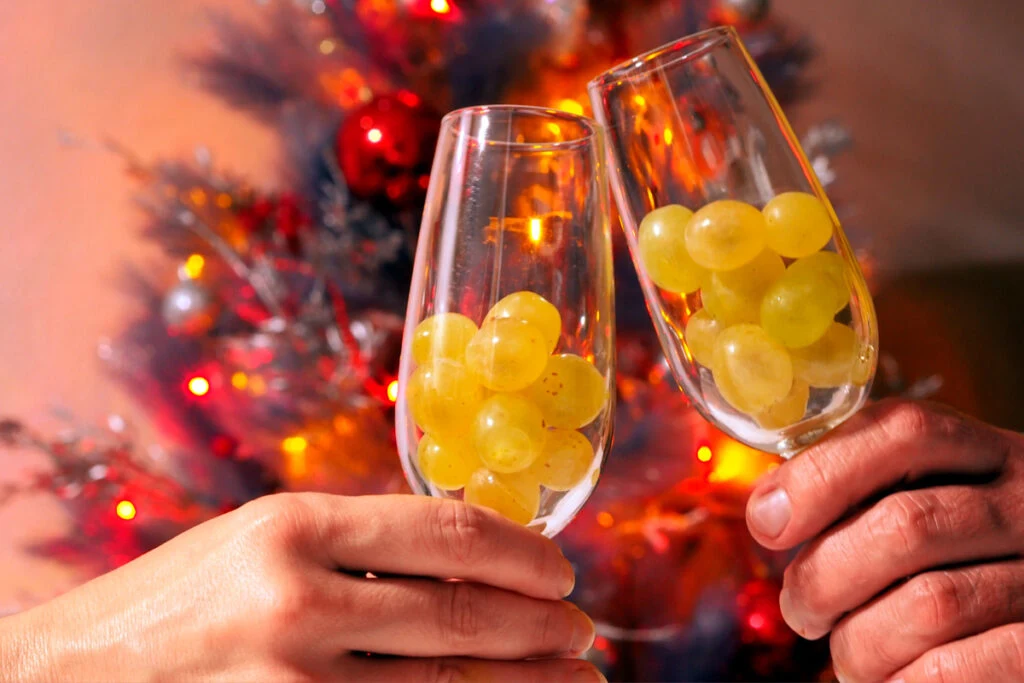
One of the best-known New Year in Peru traditions involves eating 12 grapes at midnight, one with each bell chime, while making a wish for each month of the year. Grapes symbolize abundance, and this practice supposedly brings prosperity and happiness throughout the coming 12 months. People make sure to have fresh grapes ready to start the new year with positive energy.
3. Burning the Rag Doll (Año Viejo)
Burning the rag doll or “Año Viejo” (Old Year) is another wildly popular tradition. People create a rag doll representing the departing year, symbolizing everything negative and all bad experiences. The doll gets stuffed with gunpowder and fireworks, then burned at midnight while everyone celebrates and welcomes the new year. The idea is to leave behind the bad stuff and start with a clean slate, hoping the new cycle brings only good things.
4. Colored Candles
Colored candles carry deep symbolic meaning in Peru. Popular belief assigns each candle color a special significance:
- Yellow: Attracts prosperity and money
- Red: Brings love and passion
- Green: Ensures health and wellness
- White: Creates peace and harmony
- Purple: Provides spirituality and protection
Each family member lights their chosen colored candle based on what they want to attract in the new year. Candles must be placed safely and left burning through the night to symbolize the fulfillment of wishes.
5. The Suitcase: Travel for Success
One of the most entertaining superstitions among Peruvians involves carrying a suitcase around the block at midnight. This act supposedly attracts travel and adventures during the coming year. The tradition symbolizes openness to new horizons and willingness to embrace new challenges.
6. Lentils in your Pocket
A beloved tradition involves carrying lentils in your pocket or placing them around the house on New Year’s Eve. Lentils represent money and economic prosperity due to their coin-like shape. Many Peruvians fill their pockets with lentils at midnight or scatter them throughout their wallets and purses, believing this simple act will ensure financial abundance throughout the year.
You may be interested: Peru in the summer: 6 best places to visit
Feria de la Alasita in Puno
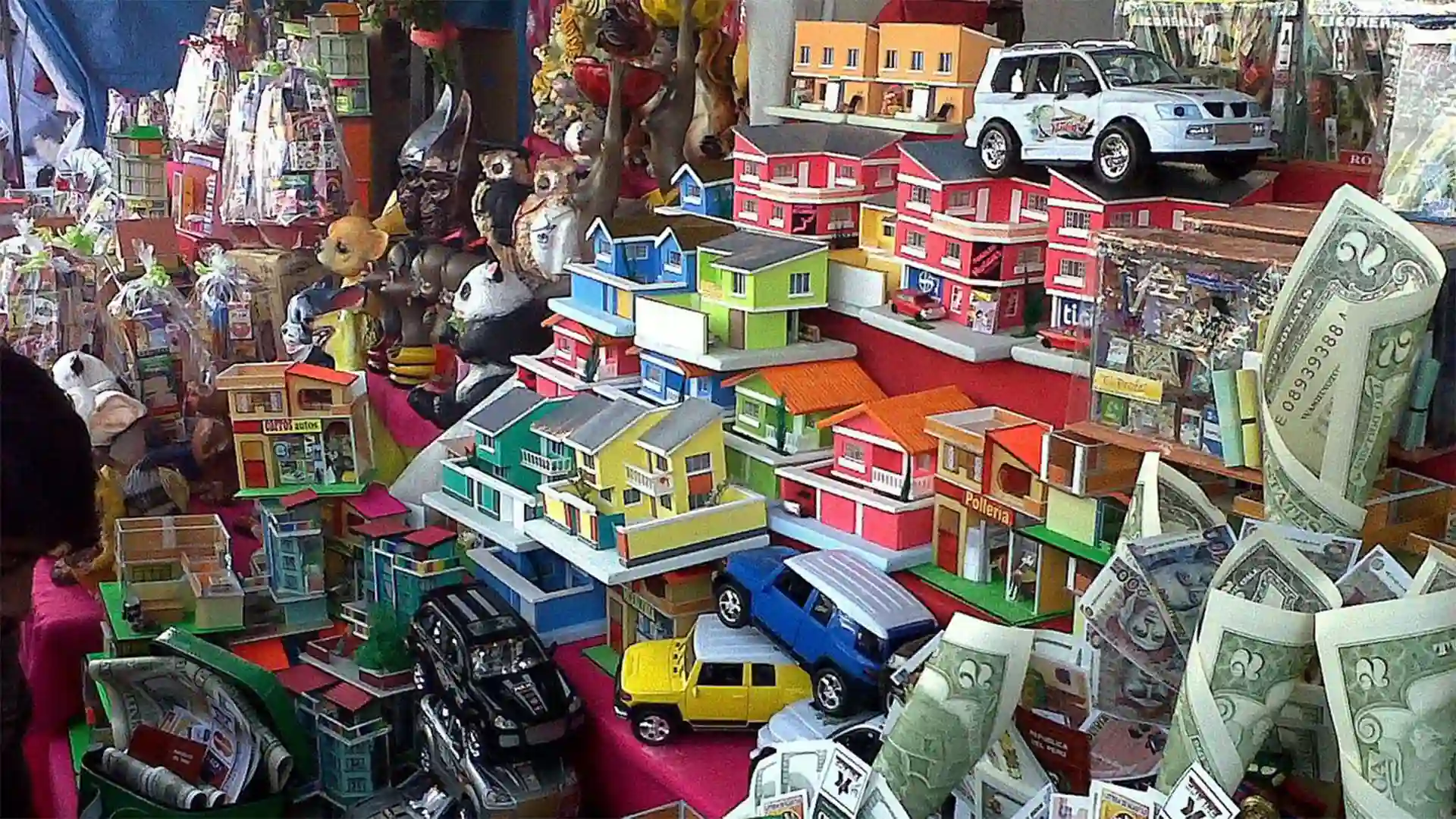
The connection between New Year in Peru and the Ekeko becomes even more vibrant during the Feria de la Alasita, held in Puno in early January. This traditional fair happens right after New Year’s celebrations and centers entirely around miniature items called “alasitas.” Vendors sell tiny replicas of everything imaginable: houses, cars, money, diplomas, marriage certificates, food, and business permits.
People buy these miniatures and have them blessed by an Ekeko figure or a shaman, believing that purchasing and blessing these small versions will manifest the real thing during the year. The Alasita fair extends the New Year’s spirit of hope and manifestation, making it the perfect way to solidify your intentions for the coming months. Visitors can experience this unique tradition while enjoying traditional music, dances, and local food in the heart of the Andean highlands.
Flowering bath for New Year’s in Peru
One of Peru’s most enchanting New Year traditions is the baño de florecimiento, or flourishing bath, a spiritual cleansing ritual rooted in Andean culture. This beautiful practice involves bathing in a fragrant mixture of flowers, herbs, and aromatic ingredients believed to wash away negative energy and open the door to abundance, love, and prosperity in the coming year.
Who performs It
The baño de florecimiento can be experienced in two ways. Many Peruvians prepare and perform this ritual at home with family members, making it an intimate personal practice during New Year’s celebrations. However, for a more profound spiritual experience, people seek out curanderos (traditional healers) or shamans who have inherited this ancestral knowledge from indigenous communities across Peru, including the Qeros, Shipibo, and other Andean and Amazonian tribes. These spiritual practitioners perform the ceremony at sacred sites, ceremonial centers, or along riverbanks, bringing decades of expertise and deep spiritual connection to the ritual.
How it’s done
The ritual begins with the careful preparation of a floral infusion. Fresh flowers such as roses, carnations, and marigolds are combined with aromatic herbs like basil, rosemary, and rue, along with citrus peels, cinnamon, and cloves. When performed by a curandero, the healer selects specific flowers according to your personal energy needs and intentions. The mixture is boiled, blessed with prayers and chants, then allowed to cool. After a regular cleansing shower, the fragrant water is poured over your body from head to toe, typically three times, while the practitioner offers prayers and invocations for prosperity, health, and renewal.
Recommendations
For the best experience, perform the baño de florecimiento on New Year’s Eve or during the first days of January when the ritual’s power is believed to be strongest. Approach the ceremony with an open heart and clear intentions about what you wish to release and manifest. If doing it at home, use fresh, vibrant flowers and natural ingredients, avoiding artificial or wilted blooms. Create a peaceful atmosphere free from distractions.
Yellow underwear Peru
In Peru, one of the most unique and widely practiced New Year’s traditions is the belief that wearing yellow underwear on December 31st will bring good luck and prosperity for the coming year. This tradition, popular throughout the country, holds deep cultural significance and is a fun way for Peruvians to symbolically usher in a new beginning.
Where did the tradition start?
The tradition of wearing yellow underwear has ancient roots, intertwined with both Andean and Spanish influences. The color yellow is traditionally associated with wealth, happiness, and energy. In the Andes, it is thought that this color symbolizes the sun and the abundant harvests of the earth. Peruvians believe that wearing yellow underwear will attract prosperity, good fortune, and success in both personal and financial aspects.
A joyful and cherished tradition
While it may appear unusual to outsiders, wearing yellow underwear on New Year’s Eve is a deeply beloved tradition that Peruvians embrace with genuine enthusiasm. This vibrant custom beautifully reflects the country’s cultural tapestry, weaving together ancient beliefs and modern celebrations. For Peruvians, the yellow underwear transcends its playful appearance, embodying hope, renewal, and the collective desire for prosperity in the year ahead. Whether you find yourself celebrating in Lima, Cusco, or any corner of Peru, you’ll witness countless people joyfully honoring this colorful ritual as they welcome the new year with hearts full of optimism and dreams of abundance.
You may be interested: Complete packing list for Peru
Cusco New Years Eve
Celebrating Cusco New Year’s Eve in this historic city is a unique experience that blends tradition, culture, and a vibrant atmosphere. The end of the year here is not just about saying goodbye to the old, but also embracing new beginnings. From lively plazas filled with color and music to ancestral customs celebrated at every turn, the city offers one of the most authentic and exciting New Year’s Eve parties in Peru. If you’re looking for a destination to toast to the future surrounded by the majestic Andes, there’s no better place to spend the last night of the year. Afterward, why not continue your adventure with one of the many Peru trekking tours, exploring the stunning landscapes and rich history of this incredible country?
Plaza de Armas Comes Alive
Plaza de Armas is where everyone wants to be when midnight strikes. Thousands of Cusqueños and tourists gather there to watch fireworks light up the sky over the Cathedral and the Church of La Compañía de Jesús. The spectacle is breathtaking, with lights reflecting off colonial walls while people hug, toast with champagne, and eat the traditional 12 grapes.
The atmosphere starts heating up around 9 PM. Bars and restaurants around the plaza like Norton Rat’s, Mama África, and Los Perros feature live music and people start spilling into the streets with drinks in hand. By 11 PM it’s impossible to move – the plaza is completely packed.
San Blas, the Bohemian Quarter
If Plaza de Armas seems too chaotic, the San Blas neighborhood offers a more intimate and artistic alternative. Its cobblestone alleyways fill with travelers and local artists. Bars like Limbus Restobar, which has a terrace with panoramic views of Cusco, or Museo del Pisco, specializing in Peruvian cocktails, offer more relaxed celebrations.
Plazoleta San Blas is the meeting point. It’s much smaller than Plaza de Armas but has its own special charm. Restaurants like Pachapapa, with its open-air colonial courtyard, prepare special menus featuring gourmet Andean dishes. The vibe here is calmer, with live Andean music and bonfires in some courtyards.
Where to Dine
If you want a special dinner, Tunupa is a solid choice with its traditional Peruvian food and plaza views. There’s also MAP Café inside the Pre-Columbian Art Museum, where they serve a perfect fusion of Andean ingredients and modern techniques in a spectacular colonial setting.
Cicciolina near Plaza Regocijo is ideal for a romantic dinner, with its Mediterranean-Peruvian cuisine and candles everywhere. Chicha by Gastón Acurio never disappoints with its elevated versions of Cusco classics. Here you can try baked guinea pig, grilled alpaca, or Cusco-style roasted pork. Just book ahead because they fill up fast.
Limo, facing Plaza de Armas, combines Nikkei cuisine (Peruvian-Japanese) with prime views of the fireworks. El Mercado is another gem, with a more casual atmosphere but incredible food and creative cocktails.
Sacred Valley: Ollantaytambo and Pisac
Many prefer to escape downtown and celebrate in the Sacred Valley. Ollantaytambo preserves its original Inca layout and celebrates the New Year in Peru with a unique mix of traditions. The main plaza fills with locals and tourists, but on a much more manageable scale than Cusco.
Boutique hotels like El Albergue and Pakaritampu organize special dinners in their gardens, with organic food from the valley and live Andean music. Some include Pachamama gratitude ceremonies led by local shamans before midnight.
Pisac is even quieter. Its artisan market closes early on the 31st, but restaurants like Ulrike’s Café and Mullu prepare communal dinners where you meet other travelers. After midnight, many hike up to the Pisac ruins to watch the sunrise on the first day of the year with spectacular valley views.
Machu Picchu Pueblo (Aguas Calientes)
For the more adventurous, spending New Year’s Eve in Aguas Calientes, the town at the foot of Machu Picchu, is a unique experience. The town fills with travelers from around the world celebrating together. Main restaurants like Indio Feliz, Café Inkaterra, and Toto’s House prepare special dinners. If you’re embarking on the Classic Inca Trail, this experience becomes even more memorable, as you’ll arrive at Machu Picchu after an unforgettable trek, just in time to witness the magical start of the new year surrounded by the ancient ruins.
What’s special here is that you can book a Machu Picchu entrance for January 1st and be among the first to enter the citadel in the new year. Watching sunrise over the Inca ruins on the first day of the year is something you’ll never forget.
You may be interested: Best tourist attractions in Peru
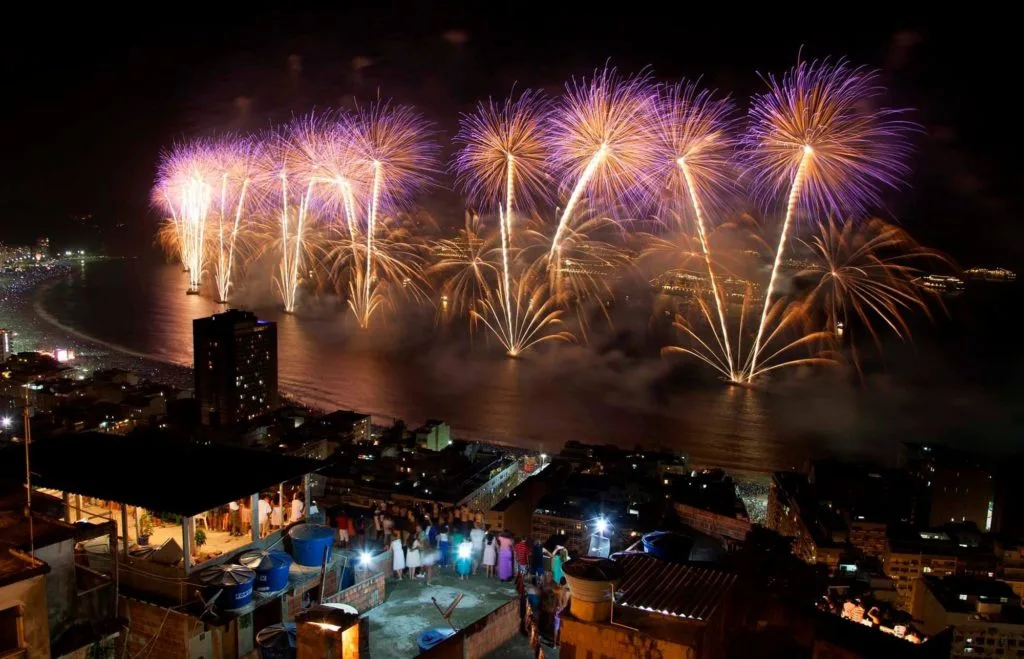
New Year in Lima
Lima celebrates New Year’s Eve in style, from the cliffs of Miraflores to the southern beaches. The capital combines its incredible gastronomy with local traditions and lots of partying.
Miraflores
Miraflores is the district where it all happens. Óvalo Gutiérrez fills with people outside bars and restaurants. Bars like Ayahuasca, with its colonial house converted into a mystical temple décor, throw parties with DJs until dawn. The neighborhood around the oval has places for all tastes: from sports pubs to electronic clubs.
Larcomar, the shopping center built into the cliff facing the ocean, is perfect for watching fireworks launched from the beach. You arrive early, dine at one of its restaurants like Tanta or La Rosa Náutica (a restaurant built on a pier over the sea), and at midnight head to the outdoor terraces for the show. Fireworks from Miraflores, Barranco, and Chorrillos beaches are visible from here, creating a 360-degree show.
Kennedy Park and Central Miraflores
Kennedy Park, though chaotic, has its charm. It fills with street vendors, people with cheap champagne, families with kids, and the famous Miraflores cats observing everything from their corners. It’s not the most elegant place, but it has the energy of a real Peruvian street celebration.
Bars around the park like Huaringas Bar, famous for its Amazon herb concoctions mixed with pisco, offer New Year in Peru specials. La Noche, a salsa bar, organizes parties lasting until sunrise.
Barranco: The Bohemian district
Barranco is another great option, especially if you’re looking for a more bohemian and artistic vibe. Its cobblestone streets, colonial bridges, and bars with live music create a unique atmosphere. The Bridge of Sighs becomes super romantic for ringing in the new year with your partner. There’s a legend that if you cross the bridge holding your breath while making a wish, it’ll come true.
La Bajada de Baños, which leads from the bridge down to the beach, becomes a giant street party. Bars like Ayahuasca Barranco (the original), Santos, La Noche, and Barranco Beer Company have special events. Many offer access to their terraces to watch beach fireworks.
Barranco Boulevard, a pedestrian street full of bars and restaurants, is perfect for bar-hopping. You can start with cocktails at Victoria Rooftop, continue with craft beers at Barbarian, and end up dancing at La Noche or Dada Bar.
San Isidro
If you’re looking for something more elegant and less crowded, San Isidro is your option. Golf Los Incas, a green area surrounded by skyscrapers, offers a more sophisticated celebration. High-end restaurants like Matria, Osaka San Isidro, La Mar San Isidro, and Maido prepare special tasting menus.
The Country Club Lima Hotel organizes one of Lima’s most exclusive galas, with gala dinner, live music, and private fireworks in their gardens. Dress code is formal and prices are high, but the experience is top-notch.
The Camino Real and Conquistadores area has several elegant bars and clubs like Bizarro and Cocodrilo Verde, where the party is more controlled but equally fun.
Lima’s Gastronomy shines
Lima isn’t called Latin America’s gastronomic capital for nothing. For New Year’s, top restaurants like Central, Maido, Astrid & Gastón, Rafael, and Osso prepare special tasting menus that can have up to 15 courses. You need to book at least a month in advance because they sell out crazy fast.
Central, Virgilio Martínez’s restaurant ranked among the world’s best, offers a culinary journey through Peru’s altitudes, from sea to Andes. Maido by Mitsuharu Tsumura is the temple of Nikkei cuisine. Astrid & Gastón, in a restored colonial mansion, is the complete Peruvian haute cuisine experience.
If you’re looking for something more relaxed but equally delicious, in Miraflores and San Isidro you have options like La Mar for the best ceviche (arrive early as they don’t take reservations), Isolina for home-style criolla food with that grandmother’s touch, or Panchita for anticuchos and causas. All offer special menus with festive atmosphere.
El Mercado, La Picantería, and Amaz are other excellent options celebrating Peruvian ingredients. El Bodegón is perfect for Spanish tapas with a Peruvian twist, ideal for snacking all night.
Downtown Lima: The Popular Celebration
Lima’s Historic Center, a UNESCO World Heritage Site, offers a more popular and authentic celebration. Plaza Mayor fills with Limeños who come to watch fireworks launched from the Cathedral and Government Palace. It’s more chaotic and less touristy than Miraflores, but has the charm of a real local celebration.
The Chinatown, near downtown, offers a different option. Chifa restaurants (Chinese-Peruvian food) like Wa Lok and Salón Capon prepare special banquets. Some celebrate following the lunar calendar, so there’s a double celebration.
How to say Happy New Year in Peru
In Peru, as in other Spanish-speaking countries, people greet each other with “¡Feliz Año Nuevo!” (pronounced feh-leez ah-nyoh nweh-boh), which translates directly to “Happy New Year!” You’ll hear this cheerful expression everywhere from midnight on New Year’s Eve through the first days of January as Peruvians embrace friends, family, and even strangers with warm wishes for the year ahead. Beyond this classic greeting, Peruvians also share heartfelt expressions like “¡Próspero Año Nuevo!” (Prosperous New Year) or “Que tengas un feliz año” (May you have a happy year).
You may be interested: Huayna Picchu Stairs of death in Peru
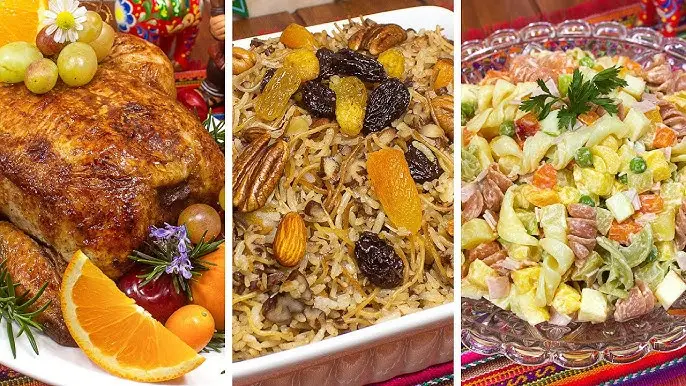
Traditional food during New Year in Peru
Peruvian food is incredibly diverse and deeply connected to the traditions and customs of its people. During New Year’s, the dinner table is filled with traditional dishes, each with its own flavor and meaning. From juicy meats to flavorful side dishes, food in Peru during this celebration reflects the country’s rich cultural heritage and its different regions.
1. Pollo a la Brasa
One of the most iconic dishes for New Year’s Eve in Peru is pollo a la brasa. This rotisserie chicken is marinated with a special blend of spices and cooked to perfection, with a golden, crispy exterior and a tender, juicy interior. It is usually served with crispy fries, a fresh salad, and a spicy aji sauce that adds the perfect touch. Its popularity in family gatherings, especially in Lima, makes it a must-have at New Year’s dinners, where it’s enjoyed with good company.
2. Pachamanca
Pachamanca is an authentic dish from the Peruvian Andes. It’s cooked in a pit oven with hot stones, where various meats like pork, chicken, lamb, and cuy (guinea pig) are combined with local tubers such as potatoes, sweet potatoes, and corn. Everything is wrapped in banana leaves and cooked slowly, creating a smoky and flavorful mix. This dish is perfect for anyone who wants to experience the cultural richness of Peru while enjoying a comforting and hearty meal.
3. Cuy (Guinea Pig)
In the Andean regions, cuy holds special significance and is often seen as a delicacy. It’s typically roasted, fried, or stewed, and served with potatoes and corn. The texture is tender, and when roasted, it has a crispy skin that adds a unique flavor. For those looking to fully immerse themselves in Peru’s cultural experience, cuy is a must-try dish.
4. Chicharrón
Another beloved dish during the celebrations is chicharrón, or fried pork. The pork is deep-fried until it becomes crispy and golden. It is often served with fried sweet potatoes and salsa criolla, a tangy onion and lime salad with a touch of spice. This dish is commonly served for breakfast or lunch on January 1st, especially in coastal regions, and it’s often enjoyed alongside panetón, the traditional Peruvian Christmas and New Year’s bread.
5. Tamales
Tamales are another classic dish in Peruvian holidays. Made from corn dough (masa) and filled with chicken, pork, or sometimes even seafood, tamales are wrapped in banana leaves and steamed to perfection. These flavorful little packages are perfect for sharing with family during the celebration. Their unique taste and portability make them a popular choice during the festive season.
6. Panetón (Panettone)
There’s no New Year in Peru without panetón. This sweet Italian bread, which has become a tradition in Peru, is filled with dried fruits, nuts, and sometimes chocolate. It’s the perfect way to end the meal, especially when paired with a hot cup of chocolate. Panetón symbolizes the joy and warmth of the season, and it’s an essential part of the celebrations.
7. Pisco Sour
Though not a food, Pisco Sour is essential to New Year’s celebrations in Peru. This refreshing cocktail, made with pisco (Peru’s national liquor), lemon juice, egg white, sugar syrup, and a dash of bitters, is the perfect way to toast to the new year. It’s enjoyed at every family gathering and serves as a symbol of Peruvian hospitality and pride.
